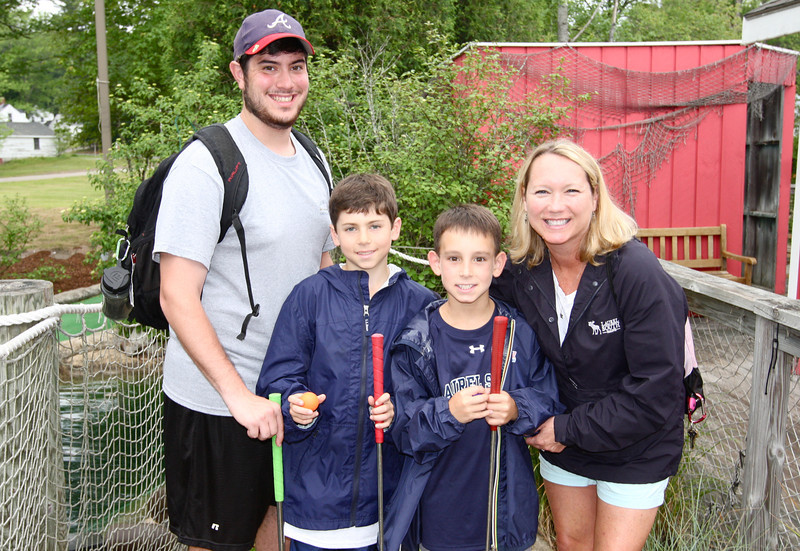
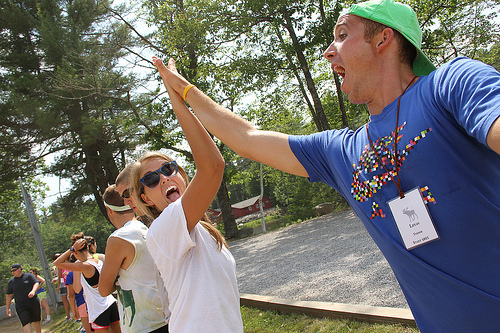
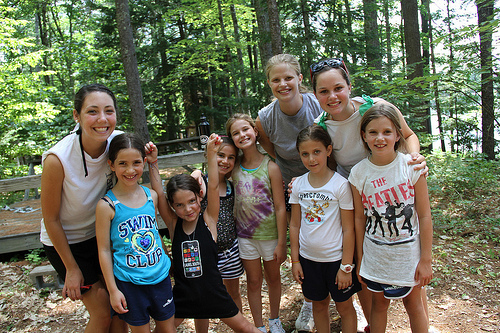
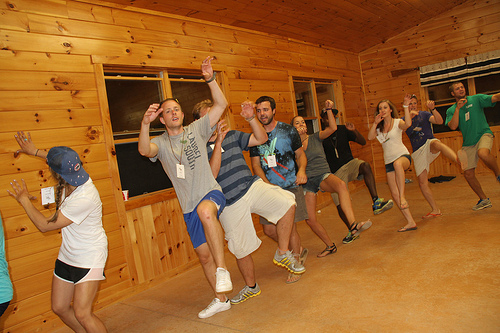
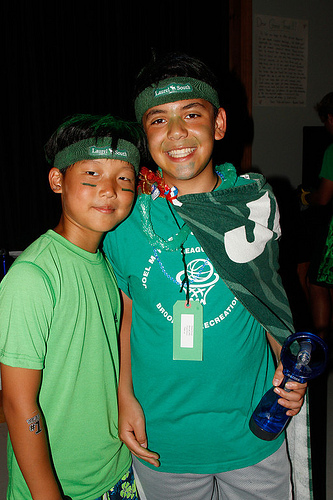
The Great Outdoors: There’s nothing better than fresh air, sunshine and amazing Crescent Lake. Rolling hills, trees as far as the eye can see…you won’t find a better office or cubicle than a summer in Maine.
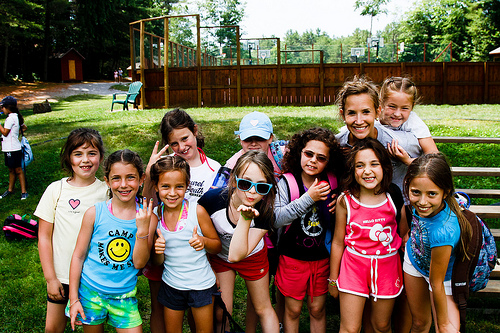
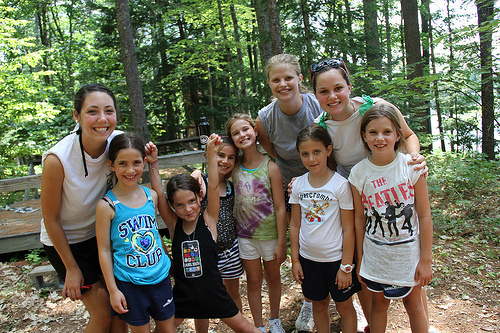
Be the Difference: Camp counselors instantly become role models for campers. Every moment is an opportunity to form a lifelong memory, whether funny or poignant. What you do matters, and that’s the best feeling of all.
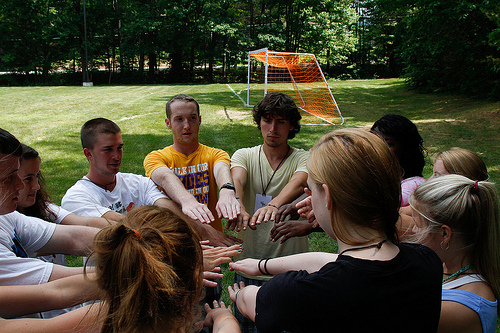
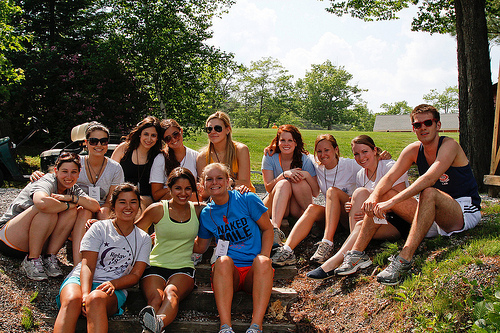
Lifelong Friendships: Camp is a unique environment because it’s the ultimate team endeavor. Counselors are surrounded by people who are like-minded in so many ways and come with a similar appetite for adventure. On camp departure day counselors have a network of peers that extends from coast to coast (and into other countries!)
Leadership: Camp is genuine, and everyone is encouraged to be themselves. Counselors are also guiding campers all day, every day. Getting to a level of comfort while leading translates into confidence in so many other areas of your life.
Unplug: Camp is the easiest place to look up and live in the moment. You have meaningful conversations and form amazing relationships. Don’t get us wrong, you’ll have tons of ‘Gram-worthy’ pictures from the summer. And every one of them will have a funny story to go along with the people and places included in them.
Learning: You learn so much about yourself at camp. You’re spending two months in a new environment and will be glad you embraced the opportunity. You’ll gain valuable new perspectives from interacting with campers and counselors from different walks of life. It’s truly incredible.
Summer is a few months away, and for college students searching for a summer job or internship, it’s right around the corner. Every year students compete for unpaid internships with lofty ambitions that they’re getting a foot in the door for their future careers. While there are great opportunities to be had in corporate settings, few summer gigs are as beneficial as working at camp. Here are some of the best incentives for working at Laurel South this summer!
Gaining Leadership Skills
Just like teaching in a classroom, being a camp counselor instantly puts you in a position to lead campers of different ages and skill levels. You’re constantly forging bonds with campers and other counselors, leading activities and communicating. Camp counselors quickly learn how to lead, because they understand the more engaging an activity is, the happier their campers are.
Creativity
We often say that a day at camp is like a week outside of camp, and camp people know that all too well. What’s better than a job where your coaching or instructing in the morning, making up new games during cabin time, and acting out your alter-ego on stage for a laugh in the evening? Camp gets you out of your comfort zone in the best way and allows the creative juices to flow every day.
Make Lifelong Friends
Camp is an immersive experience and there’s nothing else like it. Working alongside your peers is one thing, but living with them 24/7 is an entirely different experience. Campers and counselors alike build some of their truest, deepest friendships at Laurel South every summer!
Work Outdoors
Is there anything worse than squandering amazing summer days in an office? At Laurel South, you’re outside every day. It’s the perfect place to unplug, lace up and explore the beauty of Maine!
Make a Genuine Impact!
Campers are at a time in their lives when they’re looking for mentors, and Laurel South is such a natural place to find them. It’s always the little things that count, and being there every day for your campers adds up to a lot of little (and big) moments that make a difference each summer. Counselors often don’t fully realize the impact they’ve made, but campers remember their counselors forever.
Camp is one of the great positive experiences that can truly alter the course of ones’ life. Campers and counselors are exposed to new ideas, activities and situations that provide eye-opening opportunities. Campers can try a new sport that might become a passion resulting in making a high school sports team. Counselors might realize that working with children is their calling in life.
Campers from different regions are exposed to new programs and activities that may not be widely available in their area… wakeboarding, equestrian, stand-up paddling to name a few. They may discover a passion for cooking in the Culinary Center or the wide variety of artistic endeavors beyond painting.
Counselors experience new things as they learn to care for others. They’re afforded the opportunity to instruct and coach in their area of expertise. They meet peers and mentors from all over the world – creating a network of people with shared interests and goals.
Campers and counselors learn about kindness, patience and community as they share time, space and triumphs with their cabinmates and friends. Camp provides a place for all to unplug and mentally recharge. A place where we celebrate achievements and embrace learning opportunities. Everyone plays sports; everyone gets up on waterskis; everyone sings around the campfire. Everyone is challenged at the appropriate level and improves, whether in the arts, athletics, acting or adventure. Everyone has a place at camp.
Even though camp is three months away, snow covers the ground in many locations and you just barely finished making spring break plans, if you’ve committed to working at a summer camp, it’s already time to begin thinking about the summer. Here are five camp things to begin thinking about in the spring:
1.) Make travel arrangements. How will you be getting to camp? Will you drive, fly, carpool? If you plan to fly, airline tickets are often less expensive in the early spring before the weather warms and people begin making summer vacation plans. Carpooling is a great way to get to know co-workers while splitting the cost of fuel. If you plan to carpool, reach out to other camp staff through your camp’s Facebook page or other resources offered by your camp and begin to get to know others from your area who may be interested in traveling together. If your camp offers travel reimbursement as part of your contract, it’s also very important that you understand the reimbursement process prior to making travel plans.
2.) Set goals. Camp is a work experience like no other and it can be a bit overwhelming at first. Setting goals prior to arriving helps minimize culture shock. When setting goals it’s important to keep an open mind. Summers at camp tend to have a lot of twists and turns. Your list will likely evolve as you familiarize yourself with your new environment, and there are some things that will probably not pan out quite the way you initially envision them. That’s okay. The importance of setting goals is that they help you mentally prepare for the camp experience and arrive with some sense of direction.
3.) Begin stockpiling…but not too much. Packing for camp is an art. Living space is very limited. At the same time, camps are usually in rural places that don’t have a lot of nearby shopping options, and limited access to computers and the internet make online shopping a bit more challenging too. So it’s extremely important to pack the right combination of items that can be easily replaced with those items that are difficult to come by or require a bit of a drive to acquire. Chances are, you will have several opportunities throughout the summer to replenish basic items such as shampoo, deodorant, sunscreen, etc. So if you need to maximize luggage space, pack just enough of these items to get you through the first couple of weeks. It’s a good idea, however, to begin thinking about acquiring certain items, such as bedding, towels and socks, that people tend to overlook until the last minute. By beginning to accumulate those items a few months ahead of time, you’ll avoid that last minute binge shopping trip in which something essential and perhaps not easily acquirable is inevitably forgotten.
4.) Complete forms. In the spring, your camp will either mail or make available online a series of forms. These forms may include a contract, standard employment forms, forms requesting information about how you intend to travel to camp, and forms that require medical and insurance information. Although completing paperwork is never the most exciting task, it is essential that you complete and submit these forms prior to your arrival at camp. First, the camp must have these completed forms in order to pay you or treat you for any medical emergencies or conditions. Second, many camps will not issue you id badges or uniforms until they have received these completed forms. Orientation is a very busy time and few staff members love the idea of having to take some of their downtime to complete paperwork.
5.) Learn about the camp. Presumably, you learned at least a little bit about the camp prior to accepting a job there. But now that you’re actually going to be part of it, really get to know it. Watch the camp video if you haven’t already. Re-watch it if you have. The camp video is a great way to preview the camp culture. Also, if your camp participates in any social media outlets (and many do these days), begin following them to get a sense of who your co-workers are as well as your camp’s values and traditions. Also, a lot of camps provide tips and updates for staff through their social media outlets as camp draws near. Of course, it’s impossible to get a full sense of what your camp is all about until you get there, but arriving with some sense of what (and who) to expect is a lot less disorienting than arriving with none.
A popular question that a lot of prospective summer camp counselors ask recruiters is about the difficult aspects of the job. After hearing about how much fun they will have, about the amount of time they will get to spend outdoors, about all of the friends they will make, and how much money they can save, it all sounds a bit too good to be true. Candidates want to know, ‘So, what’s the hard part?’ It’s a good question because, while it’s true that a simple internet search will produce article upon article about all of the great aspects of working at a sleepaway camp, few highlight the difficult parts of the job. In the name of bucking the status quo, this blog is going to take a stab at it.
First, camp ends. That’s probably the hardest part. From an outsider’s perspective, a couple of months never seems like a long time, certainly not long enough to form any permanent bonds or attachments. What a lot of people fail to consider, because it’s just such a foreign concept to most people, is that those two months aren’t 9-5, 5 days per week months. They’re 24/7 months—including meal times. That’s roughly 1,344 hours of constant interaction with campers and co-workers compared to the 320 hours those people who just do that daytime thing get. A little basic math establishes that’s roughly eight months of regular work time crammed into two. Eight months is the better part of a year and plenty of time to get pretty attached to new friends as well as campers. That’s why tears are usually inevitable when it comes time to saying goodbye. Goodbye is always hard. But it’s even harder when you know that you may never have the opportunity to see some of the people with whom you’ve just spent the equivalent of eight months of your life again.
Second, you have to be comfortable around children. This sounds like a no brainer, but if you’re used to spending most of your time around adults, spending most of your time around children requires a bit of an adjustment. It goes without saying that interacting with children requires a filter of sorts. Obviously, you don’t share everything with children that you would with other adults. Interacting with children also requires a great deal of discretion. They’re looking at you for answers. Not only knowing what answers to give but when to give them is important. Knowing when it’s not your place to answer but to escalate the issue is even more important. Also, successful interaction with children is all in the presentation. You have to be a good salesperson to a certain extent. Before signing up to work at summer camp, think about the fact that convincing at least one camper to do something he or she does not want to do and to have fun while doing it is likely going to be a daily occurrence. If you’re a person who is quick to lose patience, summer camp may not be the right fit for you.
Third, stepping outside of your comfort zone is difficult. Think about it. When you’re feeling like pizza, do you pick up the telephone and call a different restaurant to order each time or do you call that place that you know makes a killer pie? There is nothing wrong with comfort. It certainly makes life (and decisions) easier. But leaving friends and family and going to a completely foreign environment to live and work for two months is definitely taking a giant step out of the comfort zone for most people. A lot of first year staff members arrive at camp thinking they’re prepared…and then reality sets in. Just accept that you will feel disoriented for a few days and definitely out of your comfort zone, which is hard. But if you stick with it, you’ll find that stepping out of your comfort zone to work at camp is one of the best hardest things you will ever do.
Finally, working at camp is exhausting. Seriously. You need some serious stamina—both mental and physical–to make it through the summer. The days are long. The sleep is short. You will likely be given one day off per week, on which you will still find yourself spending time with the same people with whom you’ve been working for the past six days and with whom you will work for the next six days. Obviously, if you’re a person who values a lot of alone time, you might find working at camp a bit hard.
There you have it. The hard part. The fine print. The ‘What’s the catch?’ If you’ve read all of that and are ready to take on a bit of difficulty in exchange for a whole lot of fun, then a summer at camp just may be the right fit for you.
One of the most touted benefits of working at a summer camp is the network one may build even within the parameters of a single summer. Unlike many work environments, which tend to draw locals with a telescoped set of talents, summer camp attracts staff from virtually all over the world who possess an array of abilities. A successful summer at camp requires the expertise of athletes and artists alike. Because summer camps are 24/7 communities, staff members tend to form very close bonds within the two months that they reside at camp each summer. Camp breeds a sense of family, which is precisely why, for a good many staff members, goodbye at the end of the summer is seldom goodbye forever. Thanks to a little help from social media outlets such as Facebook, it’s possible to stay in touch with summer camp friends no matter where on earth they live. Whether it’s couch surfing while traveling, hunting for a job, needing a little bit of advice or support, or sharing an inside joke, camp friends are there. Working at summer camp is more than just a summer experience. It’s a way to form a global network of friends for life.
Spring is just around the corner and summer will be here before you know it, which makes now the time to start thinking about how you’re going to spend your summer. If you’re a college student, you could toil away as a server or cook at the local pizza joint or operate rides or peddle souvenirs at the local amusement or sports park. Interning in an office may even be an option you’re considering. And we all know the internships at Wall Street banks are now fewer and far between. But if you want summer employment that promises a summer full of fun and adventure while also helping you develop valuable lifelong skills that employers view favorably, consider working at summer camp. Just because your college days are behind you doesn’t mean that there isn’t a role at summer camp for you too, particularly if you are a teacher or high school or college athletics coach looking for a great way to supplement your income. In fact, the ages and backgrounds of the people who make up the typical summer camp staff are about as diverse as summer camps themselves.
If you don’t think being a counselor is really your thing or you’re pretty sure you’ve aged out of that option, don’t sweat it. There are a multitude of positions besides counselors that summer camps must fill each summer. For starters, camps have offices and offices require personnel to run them. If answering the phone and administrative tasks are more to your liking, perhaps working in a summer camp office might be the ideal option for you. Additionally, camps need people to help with daily scheduling as well as planning and executing special activities during the evenings and on special days.
If you like the idea of spending time with children but are an athlete or hobbyist who would rather focus on your passion, summer camps hire specialists to teach skills in specific sports and hobbies to campers. If your passion is photography or videography, as the camp photographer responsible for capturing the fun every day, your role is one of the most integral at camp. In fact, if you can think of an activity, there is probably a staffing need for it at camp, and sometimes some of the hardest positions to fill are ones most people just don’t think of when they think of summer camp, such as creative writing, cooking, robotics, eco science, skateboarding, or magic.
Although most hospitality positions such as food service, maintenance, and housekeeping are usually filled with international applicants, some camps hire domestic applicants as well, particularly for supervisory roles in these areas. If you are an international student who would love to earn some money by working in the U.S. before or after traveling, one of these summer camp roles may be the perfect option for you…as well as a lot of fun and a chance to make a lot of new friends from around the world!
Camps also have a need to fill key roles that require more foundational knowledge and experience. Aside from campers, camps also need division heads or campus leaders, people who lead a specific age group and supervise all of the counselors within that group. Although many camps fill all or most of their head roles from within, using individuals who have several years of successful camp experience because they require a more intricate knowledge of summer camp, occasionally they will search outside of camp, typically for teachers or other professionals who work with children. Camps also hire program or activity heads, usually college coaches and current or former professionals in their area of expertise, such as soccer, baseball, basketball, gymnastics, etc. However, since almost all activities require people to run them, those with interest and expertise in hobby or arts related programs can often find a summer home at camp in areas such as arts and crafts, dance, theater, etc. Those who manage offices, act as campus administrators, or arrange transportation are typically individuals with some type of related work experience as well. Most camps also employ camp moms or parent liaisons during the summer. These are individuals, often mothers themselves, who monitor the well being of younger campers to insure they are eating properly, staying well groomed, and having a fantastic summer.
So who works at camp? Chances are someone like you! If you’d like a summer job in which you can work among a diverse group of people from all over the world, make lifetime friends, be challenged everyday, and have the time of your life, apply now to one of America’s Finest Summer Camps!
According to the American Camp Association (ACA), nearly 1.2 million people take on the adventure of working at camp each summer. They come from all over the world and all walks of life. Some of them are former campers while others have never experienced summer camp at all. Their educations are as diverse as their backgrounds and many of them choose summer camp over a traditional internship because of the unique, well-rounded work experience it provides. Whether the winter weather already has you thinking about what you’ll be doing this summer or you’re just browsing summer employment opportunities, it’s worth asking yourself, “Am I one in a million?” :
Summer camp staff come from all over the world. Increasingly, as summer camps recognize their unique position to promote a global community in a fun, relaxed environment, they are recruiting staff from near and far. The ACA reports that within the last decade “there has been an increase in the use of international staff to expose campers to different cultures.” If you live outside of the U.S. and you’ve been wanting to travel to the USA, summer camp is a great way to earn some cash while getting to intimately experience life here. If you’re an American and a trip abroad just isn’t quite in the budget, you need go no further than a residential summer camp to make new friends from all over the world—and pad your bank account while doing it!
If you think that being a former camper is a pre-requisite to being a great camp counselor, think again. Many camp staff members who return to camp year after year never even set foot on a summer camp campus prior to working at one. Like many of their colleagues, that one step was all it took. They were won over and continue to return each season.
Summer camp employment isn’t just for education majors and coaches. Increasingly, those with majors in the social sciences, sciences, math, engineering, and even medicine and nursing are finding a summer home at camp as an alternative to the traditional internship. Summer camp provides many unique experiences that one can gain nowhere else, such as a 24/7 commitment and the opportunity to simultaneously work with children and adults in a close-knit family type community. Summer camp also develops a diverse range of core skills valued by employers today. As a camp staff member, one must make split second decisions, be an efficient negotiator, use creativity to sell ideas and concepts, resolve conflict, solve problems, be an effective leader, know how to prioritize, be extremely flexible, accept change, and be awesome when it comes to multi-tasking. If it sounds like a big order, it is. But almost all who take on the challenge report that it’s also one of the most fun and rewarding experiences upon which they’ve ever embarked.
If you are an education major or a coach, have you thought of summer camp as an opportunity to build experience working with children ages 7-15? Working at summer camp develops many of the same skills that are often used in the classroom or on the field. Many educational institutions view summer camp experience as some of the most valuable on a potential educator’s resume.
How many traditional internships pay you AND provide you with room and board? In addition to a stipend for the summer, almost all residential summer camp positions offer room and board as part of their employment packages. What this means to you is that, potentially, everything you earn throughout the summer goes straight into your pocket…or your bank account, as the case may be. Even if you allow yourself a bit to splurge on sightseeing around the local area (many of America’s finest summer camps are located in some of the most beautiful parts of the country), it’s still possible to take home a substantial amount of cash at the end of the summer. This is particularly appealing when one considers how much rent and food can add up to over a summer.
If you’re looking for the summer job to beat all summer jobs, summer camp may definitely be your cup of tea. At summer camp, everyday will be a new adventure that takes you both indoors and out from sunrise to sunset. There are no cubicles, no computers (aside from computers available for staff to use on their free time), and no time clocks. And…there are beautiful surroundings, a camp full of campers who depend on you, a slew of challenges you never knew you’d face (and enjoy), and a circle of lifetime friends waiting to meet you. If you’re one in a million, what are you waiting for? If you are a college or university student, check your college’s upcoming career fair lineups. Many summer camps travel to universities to recruit this time of year. It may be possible to meet the first member of your future camp family in person. If your college days are behind you or there are no summer camps scheduled to visit your university, you can apply directly through Camp Laurel South’s web page.
If you have children who attend sleepaway camp, work at a sleepaway camp, or know anyone who attends or works at a sleepaway camp, chances are that you’ve heard this at least once in your life: “It’s a camp thing.” For those of you wondering what that means, here’s an exclusive look inside the world of sleepaway camp and exactly what constitutes “a camp thing”.
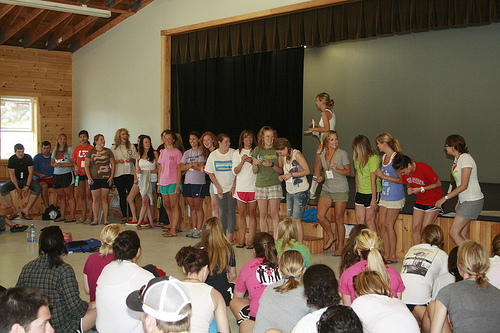
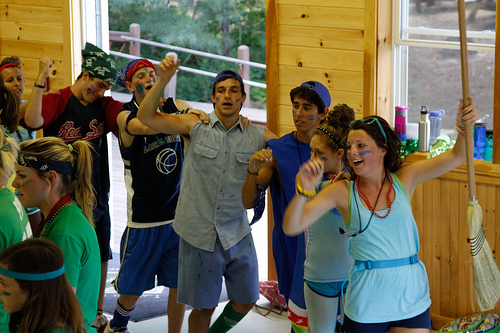
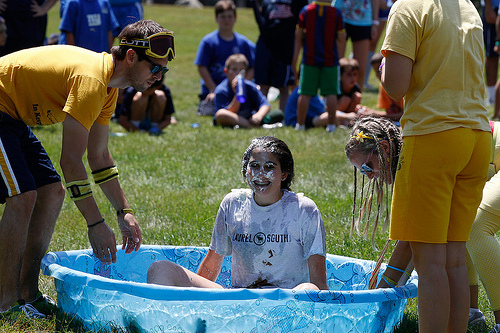
We’ll begin with a definition. “A camp thing” is an experience or tradition that is unique to summer camp. It’s also actually “camp things” rather than a singular “thing”, since there are a host of experiences exclusive to the summer camp environment. For instance, have you taken part in a competition, spread over several days, that divides the entire camp into two teams and requires contestants to do such things as cover their heads with shaving cream so that a teammate can attempt to make cheese curls stick to it, dress in team gear that includes crazy garb such as tutus, mismatched socks, and face paint, or passed buckets of water down a line in a race to see who will fill their container first? Nope? Do you know why? It’s “a camp thing”. Ever sat alongside several hundred other people around a campfire while you watch friends and staff members perform crazy acts, sing songs or participate in games? Nope? Yeah…it’s another “camp thing”.
In case it’s not obvious, “camp things” happen every day at camp, from that first moment when you get off the bus and see your camp friends and your new counselors holding your cabin signs for the first time to the last when you’re saying ‘goodbye until next summer.’ Camp things are being part of a league sports team, whether it wins or loses, going on a special trip out of camp to get ice cream, performing rituals and eating s’mores around a campfire, sitting with your friends at cookouts, taking part in the traditions that are unique to each and every summer camp, and understanding the feeling of being part of a camp family. Camp things are having sleepovers with your cabin or having a venue in which you and your camp friends can pretend to be a rock band, DJs, or magicians. Camp things are that special inside joke that your friends share all summer, end-of-the-summer trips out of camp, sing-a-longs when you’re arm-in-arm with your camp friends. And hugging some of your best friends while singing your camp alma mater and watching candles burn or fireworks explode, knowing that you might not see them again until next summer, is definitely the most precious of “camp things”. If only everyone could experience “a camp thing”…
So you’ve spent a summer—or maybe the better part of your college career—working as a summer camp counselor. You’re nearing graduation and you’re starting to pull together your resume for finding a job in the “real world”. You’ve been wondering, ‘How do I adequately articulate my summer camp experience?’ You’re worried that it will sound trivial to hiring managers, but you know that what you gained from your camp experiences are some of the most valuable skills you’ve learned. You’ve learned the art of communication, having worked with people all over the world and children ranging in age from seven to fifteen. You’ve learned the importance of discretion; your campers didn’t need to know EVERYTHING about you. You’ve learned how to negotiate, mediate, and maintain a positive morale, having coached your campers through swim tests, disagreements, activities, stage fright, and just about a million other things. You’ve learned time management skills. How many other job applicants can motivate twelve campers to move across campus from soccer to woodworking in five minutes or less, consistently coax them out of bed at 7am, and convince them that it’s time for lights out after an exciting evening of activities? You’ve learned how to use creativity to solve problems and are MacGyver with a few jars of paint, construction paper, a little bit of fabric, some scissors, and maybe a little glitter…add feathers and beads to that mix and you can practically re-invent the wheel. In fact, you’ve learned so many things as a summer camp counselor that you’re not even sure how you’re going to fit it all onto one 8 ½” X 11” sheet of paper, nevermind about your other job experience. So how do you convey the importance your summer camp job experience has had on your life in a way that hiring managers will see the value in it, too?
First, as sentimental as those experiences were for you, a hiring manager isn’t looking for the screenplay to the next The Blind Side. They’re looking for prospective employees who can efficiently yet effectively and specifically communicate their skills and abilities in a very concise manner. This means keep it relevant and as action packed as most of those days at summer camp were. Convey how active your summer camp job was through the verbs that you choose.
Second, without being too broad, make your resume sing of how well rounded your skill set is because of your summer camp counselor experience. Employers love diversity. A resume that sings of it will be sure to get a hiring manager’s attention.
Third, do your homework. Job hunting is not a one size fits all endeavor. You need to know and understand not only what you are looking for, but what the company to which you are applying is looking for as well. If there is a particular quality you feel you possess because of your summer camp counselor experience that makes you a good fit for a position or a company, highlight that one quality in your cover letter. Explain specifically how you feel your summer job experience and knowledge will translate into the new role. Having experience is one thing. Demonstrating that you understand how that experience can be integrated into others speaks volumes.
Fourth, don’t be afraid to remind prospective employers, either in your cover letter or at the interview, that being a camp counselor is a 24/7 job. Employers are attracted to people who aren’t afraid to throw themselves heart and soul into their work. What’s more heart and soul than being on duty 24/7?
Finally, be prepared. Be prepared to tell a hiring manager at an interview EXACTLY why you feel your summer camp experience gives you the edge over other applicants. When asked, don’t go into a lengthy mumble that basically amounts to a rehash of your summer(s). Show the hiring manager that you’ve thought long and hard about how your summer camp work experience is relevant to your future and that you understand specifically how to extract your experiences and apply them to other areas of your life. Most importantly, give examples, give examples, give examples!