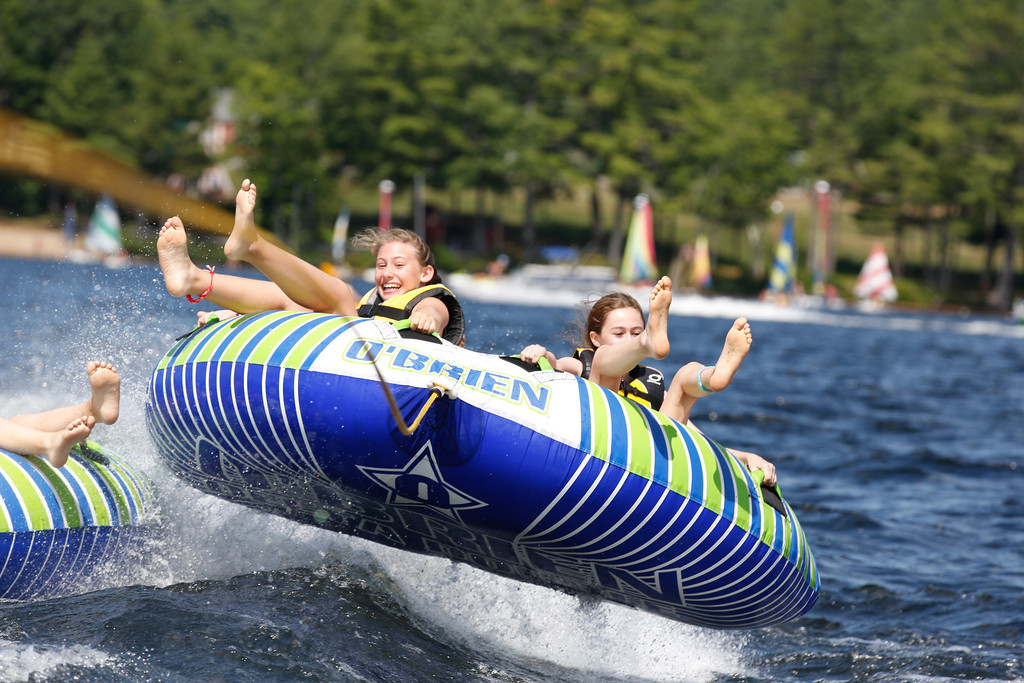
Ask Me More about Camp

Raise your hand if this sounds familiar…
Your child comes to you and says, for what seems like the billionth time, “Ask me more about camp.” It’s now December and you’ve heard some of the stories so many times that you can actually recite them along with her.  You wonder what odd but amusing little story your little one has managed to scour from the back of her mind that somehow involves the solitary five minutes of summer camp about which you haven’t yet heard.  While you’re doing this, your child only grows more impatient, “Go ahead.  Ask me,” this time becoming so excited that she hops up and down a couple of times and appears to be choreographing her own little “ask me more about camp” dance, which somewhat tops the bemusement of the time she sang for you to ask.

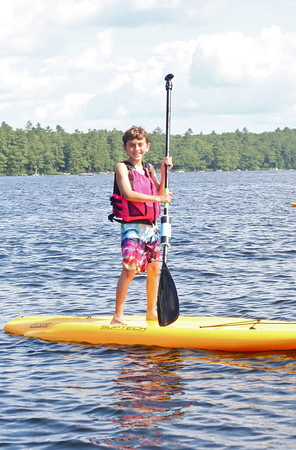
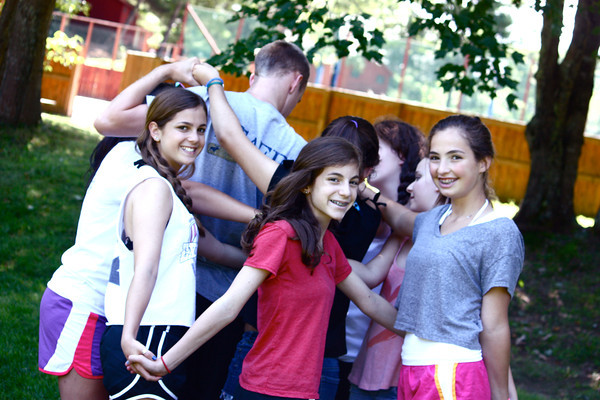
You can’t resist her enthusiasm because you think it’s great to see her this excited about anything other than the latest episode of iCarly, so you cave and wait for her mile-a-minute relay of some cute story about that time she held hands with six friends and they all jumped off the water trampoline and made a really big splash, which was really funny because it made so many waves that it almost tipped over a paddleboarder nearby…No, really it was SO funny!  Or the time they went on the nature walk, and it started raining, and they were trying to hurry back to camp, but they slipped in the mud…THAT was the funniest! You’re still trying to get the stains out of the shirt she was wearing that day, but you get an image in your head, having seen the photographs of your child and her friends covered in mud the camp posted on its website, and knew from the ear-to-ear grin that she was obviously having the time of her life, and you have to chuckle because, yes, it’s funny.
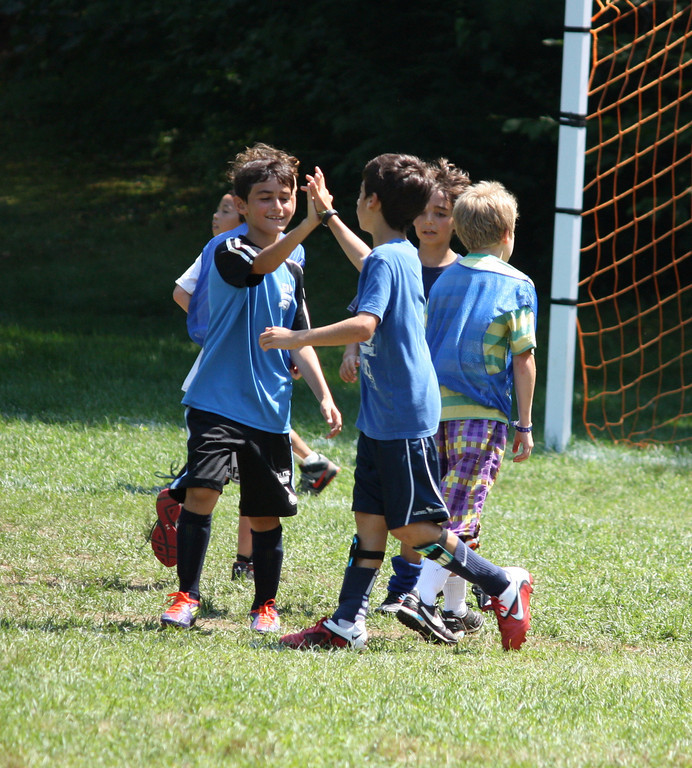
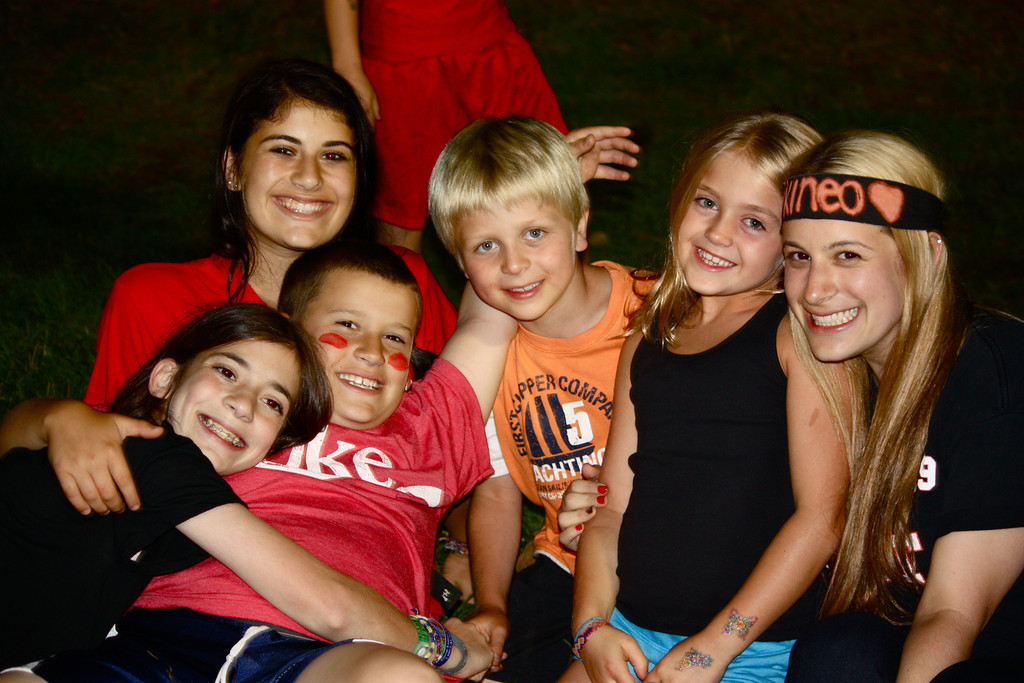
Your child starts a new story about a soccer game and how her friend had really wanted to score a goal all summer at camp but really wasn’t that good at soccer, so she blocked another player so the friend could try to score. And you realize that even though you might get asked to quiz her about camp a few hundred more times before the line turns into “I can’t wait to go back!” you don’t mind because you realize that hearing about little moments like this is nice. Not only did your child just have the time of her life, her enthusiasm in sharing her experiences with you adds great value to your decision to send her to camp because not only is she having fun but she’s learning valuable life lessons.
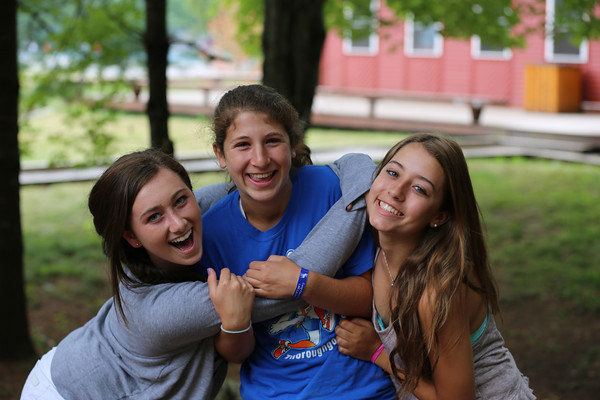
The Decision to Return to Summer Camp

Deciding to return to summer camp is a big decision that many families are already making.  Sure, it’s difficult to think about summer camp when the temperatures begin to plunge and the holidays are just around the corner.  However, it’s actually the perfect time to decide about returning to camp. The camp season is far enough removed that campers have had time to reflect on their summer.  Parents, also, likely have adequate feedback by now to be able to evaluate the value of sleepaway camp as registrations begin opening to returning campers and, in fact, at some camps, registration is almost complete. Beyond memories and adventures, there are many factors to consider, particularly as campers get older and new options begin to present themselves.  Here are some to think about:

Each summer is a new and unique experience highlighted by changes from year to year: the introduction of new activities as well as the tweaking of existing ones, fresh staff faces, new facilities or remodeled ones to accommodate new programs or expand popular ones.  Camp is truly never the exact same experience twice!

Aside from the physical changes to the camp program, campus, and staff, as children journey through their camp years, they look forward to age-specific traditions each year.  Some of them are relatively small, such as sitting at a special place during meals or a later wake-up in the mornings.  Others are fairly monumental–the trips get bigger and longer, the leadership roles become more significant, and the impact of the traditions themselves grows.

Bonds strengthen over time.  It’s always touching to hear returning campers talk about meeting their best friend at camp or share stories about their favorite counselors.  There is the intimacy of the bunk or cabin environment as well.  As children move through camp with their friends, they become very close.  Fresh opportunities also present themselves each summer for campers to make new friends while trying different things.

When one considers how much change happens at camp each summer, it’s easy to see that by not returning–even for a summer–campers miss out on something big!  The primary goal of sleepaway camps is to make sure campers are safe and have fun.  Their staffs work tirelessly during the winters and dedicate long hours during the summer to make each summer better than the last, which means that probably the most important thing to contemplate when deciding whether to return to camp is that next summer could be a camper’s best summer ever!

Past the Post Camp Lull

It’s here.  The lull.  The point at which the reality has set in that summer is over but next summer isn’t quite real enough.  By now, most of us have shared our favorite memories of camp at least a half dozen times with anyone who will listen  and we’ve actually started to settle into our fall habits, even if we still catch ourselves humming camp songs in that off moment while riding in the car or doing homework.  There is a peacefulness about this time of year, though, because it’s the point at which we really begin to grasp the summer couple of months, reflect on them, and embrace the memories of them.  Believe us!  We’re not joking when we say that for those of us at camp, the summer passes with lightning speed.  Blink more than once and miss it speed, in fact.

It’s hard to really take it all in in the moment.  But one of the best things about camp is that it is something that can be savored.  Henry David Thoreau wrote, “But the place which you have selected for your camp, though never so rough and grim, begins at once to have its attractions, and becomes a very centre of civilization to you.”  And he was right.  Camp is as much a mindset as it is a place.  For the next ten months, things will regularly happen that will remind us of something that happened at camp.  Whether it was a heart to heart with a counselor, a favorite activity, or even just the adventurous spirit that comes with discovering something new, each summer at camp is full of about a million opportunities to learn just a little bit more about life, some of them impossible to realize until well after the original moment has passed but each of them capable of taking campers and staff back to that “place.”

Summer Camp Helps Children Maintain Routine

Summer camp is a lot of fun.  One need only ask any camper on virtually any summer camp campus to confirm that notion.  Children love the activities and the relatively relaxed environment of sleepaway camp.  However, there is something else that summer camp children crave, although they might not know it:  structure.  Dr. Laura Markham asserts that routine helps children develop self-discipline, cooperation, change tolerance, and responsibility.

To an outsider, summer camps may seem like little more than organized chaos.  However, most summer camps operate around set daily schedules that move children from activity to activity at specific times throughout the day.  Although the daily activities may change, the times and length of the periods do not.  Meals are also held at set times.  The use of bugle calls, bells, music, or announcements assist campers in transitioning from one part of their day to another, which, according to Markham, helps eliminate power struggles by setting parameters and giving children a recognizable sign for knowing when it’s time to bring one activity to a close and move onto another without being told.

A daily routine also helps at night.  Research shows that children who have a structured schedule sleep better at night.  Routine also lessens anxiety and improves behavioral issues.  Children feel less anxiety when they understand what is expected of them and can confidently anticipate what will happen next.  Summer camp is built on traditions that happen from year-to-year.  Many camps are also divided into age groups that serve as steps through the camp experience from the first year of camp to the final.  From their first day at camp, there are certain rites and privileges related to sleepaway camp traditions specific to each age group to which campers can look forward as they get older.  That children can see from the beginning that summer camp is a progressive process also helps them to understand the concept of patience when working toward a goal.

Because of the benefits provided by the structure of summer camp, many parents are increasingly seeing the advantages of time spent at summer camp.  As a result, summer camp is experiencing a revival of sorts as a summer staple.  More than eleven million people attended camp last year, according to the American Camp Association.  If you’re trying to think of a way to add value to your children’s summer, consider sending them to summer camp.

Choose Your Own Adventure at Summer Camp

There is a new trend sneaking into summer camps.  An increasing number of sleepaway camps are foregoing the traditional pre-determined summer camp schedule in favor of giving campers complete control over their summer camp experience.  This approach to summer camp has become  a particularly popular approach to the summer camp experience at session camps, which tend to attract a less traditional family of campers than seven week camps.  And the appeal is mutual.

Allowing campers to customize their experience gives them the opportunity to experience a traditional summer camp while enjoying many of the same benefits that they might enjoy by attending a specialized camp.  It’s truly a best of both worlds scenario, and the response has been overwhelming.

There is certainly no shortage of children who want to experience summer camp.  The conflict seems to arise from increasingly busy summer schedules and the pressure placed on children to be great at—well—everything.  Despite our inclination as adults to want them to be everything we are and more, along with everything we are not, children need time and space to be…children.  Enter the session sleepaway camp, an environment catered to letting them be themselves while improving their skills in those activities they love while giving them ample opportunity to try out new ones in shorter, more realistic segments for the busy family.

In addition to having freedom over their activity choices, the independence children gain while at summer camp is also a great way of letting them try out their wings. For many children, camp is their first experience away from their parents.  It’s the first time they’re choosing their own clothes, deciding what to eat, determining which activities to try, and learning how to be part of a social network without the assistance of mom and dad.  For those children not quite ready for the full summer experience, a session camp is the perfect way to give camp a test drive.
So if you’ve hesitated to enroll your children in summer camp because you’re afraid it’s too much structure, or if you’ve been thinking you would like them to learn how to be a little bit more independent, consider a session summer camp.  It just may be the perfect fit.

Learning the Value of Tradition at Camp

The holidays are around the corner.  During that time of year, the word “tradition” gets thrown around a lot.  But how many people actually understand what tradition is really?  Perhaps it’s the emphasis on forward thinking and constantly in-motion global community that has caused many to confuse “tradition” with “routine.”  They’ve both become something that we do on a regular basis in order to establish or maintain a consistency or pattern in our behavior.  So what really distinguishes “tradition” from “routine”?

First, routine is something that one person does but might not necessarily have in common with others.  Most people brush their teeth at some point in time in the morning.  Few people do it at exactly the same time.  Some shower first.  Others eat breakfast.  Eventually, everyone brushes their teeth but the experience is, for all intents and purposes, individual.  There is no shared significance.

Tradition, on the other hand, is by definition community oriented.  It’s a shared custom, belief, or activity with a common understanding of the reason for its practice.  Many of us eat turkey at Thanksgiving because we symbolically associate it with that first meal between the pilgrims and native Americans.  It’s a tradition.

Second, routine, unlike tradition, is not necessarily multi-generational or even long-term.  It’s something done for a specified length of time.  While we maintain some routines for all or much of our lives, others are short term.  If one gets the flu, for instance, one might temporarily take up a routine of antibiotics.  But once the flu subsides, so does that routine.

On the other hand, tradition is something that is a common bond between multiple generations.  It’s an acknowledgment that an event or action was significant to someone tied to our past, and the observance of traditions our way of paying tribute to that event or action as well demonstrating our understanding of it.

Finally, routine is task oriented.  We take up routine in order to accomplish a goal.  There is an intended result in routine.  Tradition, however, is an observance.  Routine is a way of moving forward, whereas tradition pays tribute to the importance of the past.

By now, you’re surely asking yourself what any of this has to do with summer camp. Simply this: in a culture that places a significant amount of importance on the establishment of routine, the value of tradition is increasingly less understood and appreciated.  Summer camps, however, are grounded in tradition.  They’re  a place where campers and staff members alike get refresher courses in the power of tradition.  Whether it’s at a campfire, a sing along, or an activity specific to the camp, there are literally hundreds of opportunities every summer for those at a summer camp to bond through tradition.  Many former summer campers and staff members actually name “tradition” as one of their highlights of summer camp.  So if tradition has become an element of holidays past, consider giving your children a future opportunity to enjoy tradition at summer camp in 2013.

Camp: A Different Set of Expectations

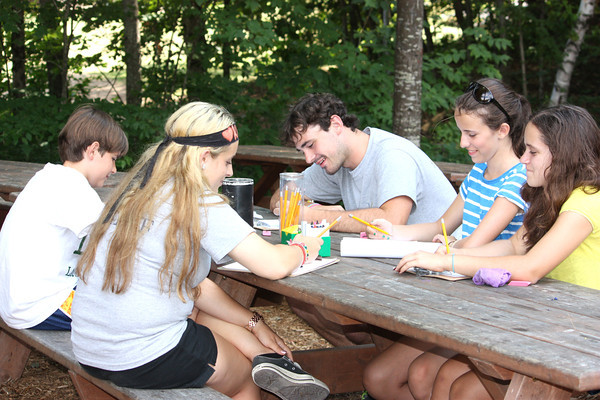
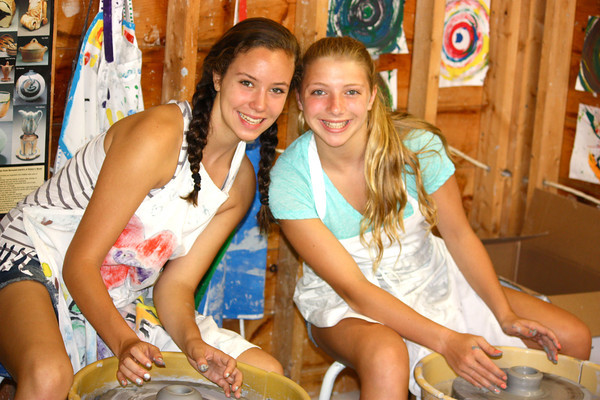
Okay, admit it.  You’ve found yourself spending a considerable amount of time admiring that candle your daughter gave you on her camp’s Visiting Day or those wooden bookends your son brought home.  Part of you wonders how come you never got to make stuff that cool when you were a kid while another part of you is mystified by how the arts and crafts staff of your child’s summer camp was able to draw out the Picasso in your little ones.    After all, you can barely get them to focus long enough to make a poster for their science projects.  What is it about camp that seems to facilitate children’s creativity?

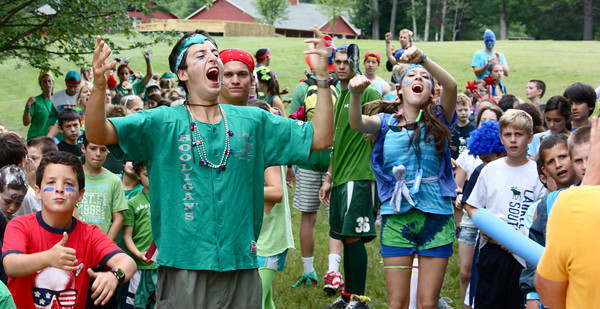
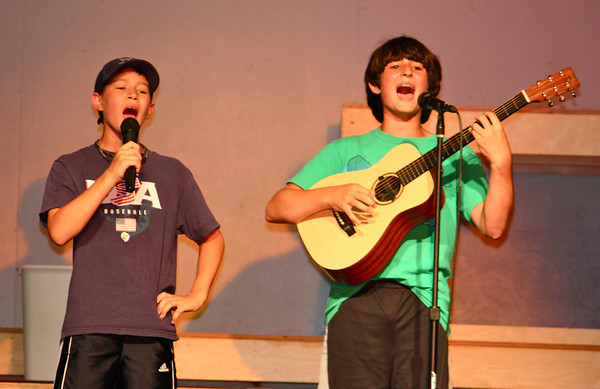
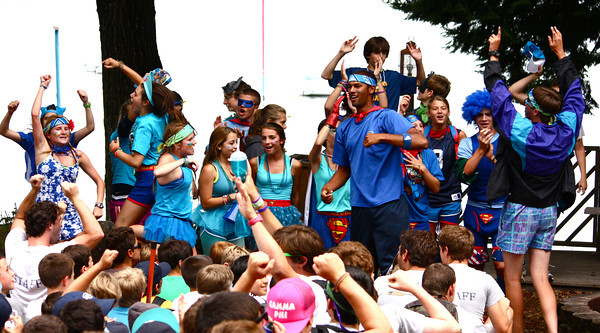
Sure it’s woodsy and remote, even quaint–the perfect place for children to feel free to be themselves.  They certainly do a lot of things at camp that they don’t get to do at home.  And you did spend the entire summer looking at photos of your daughter posing in a rainbow colored tutu—Did she ever take that thing off?—and of your son covered in face paint knowing full well that neither of them would EVER dress like that at home.  And was that your son dressed as a dog singing on stage?  Singing?  Him?  Really?  And last night he just told you, by the way, that he is trying out for the school play this year because the camp play was really fun.  He would never ever—even if someone had double dog dared him—have auditioned for a play before camp.  What changed?  The Expectations.

There are a lot of reasons children find themselves exploring more creative avenues at summer camp, but one really big one is that the expectations are different.  Children learn to respond to expectations.  Moreover, they learn to respond to the expectations of individuals.  They understand that their parents have expectations as do their teachers, siblings, friends, coaches, so on and so forth.  Whether  we’re comfortable admitting it or not, a lot of the expectations in that ten month world campers know as “winter” in some way promote conformity.  Expectations placed on children at home, in school, etc. emphasize the importance of following rules and established guidelines.  Of course, camp expectations do this, too, but the emphasis at camp is not to find one’s place in that larger whole by blending in but by standing out.  Camp is a place in which children are encouraged to try new things in a quest to find their passion.

Sure you’re thinking of those photos of your daughter holding up her latest tie-dye creation for the camp photographer’s camera—those ones in ewhich she was covered to her elbows in dye—and you’re thinking that’s you wouldn’t really classify tie-dye as a “passion.”  Maybe not.  But it could be the beginning of one, the spark that leads to an interest in art or the arts, or even just the memory of trying something new that turned out to be fun that lends courage to trying other new things.  The expectations in the “world” of camp is that campers will explore it.  Perhaps this is why it’s no surprise that many well known figures attended summer camp and attribute it to being the place where they found long-term direction.  Sure, learning how to plunk out folk songs on a guitar is a long way from the philharmonic and being part of the chorus in the camp play is certainly not Broadway, but the idea is the same and, for many campers, it’s the start of building enough self confidence to stand out.