Camp through the Eyes of a Program Director

I’m the camp’s Program Director.  I have a very unique job at camp as the person responsible for overseeing the daily scheduling of the camp’s daily activities.  Even though it’s not one of the traditional camp jobs that comes to mind when people imagine working at a summer camp, it’s a crucial one.  I like that it’s a perfect combination of behind the scenes with hands on.

One of the things I love most about my job is that I get the opportunity to get to know most of the campers and staff through daily interaction.  I’m the person they come to with requests for their programs.  I enjoy speaking with them about the things that are working in their activity areas and hear feedback about things that I might improve.

On those rare occurrences when the sun refuses to cooperate with the camp schedule, I get to demonstrate my creative talents by figuring how we can keep the fun going in all of our indoor facilities.  I also enjoy getting out on campus every now to see for myself how the schedule plays out in real time.  It’s a great time for me to take notes for the next schedule.

In the evenings, before I begin working on the next day’s schedule, I often participate in special events.  Sometimes I judge activities.  Sometimes I lead them.  Other times, I host them or just keep score.  The real reward of my job is when I overhear campers telling their counselors that they just had the best day ever as they’re heading off to bed in the evenings.  It’s a great way to begin another day because just as everyone winds down their day at camp, I head back to my office to begin working on the next day’s schedule, ready to create another “funnest day ever!” for our campers.  If you think working in camp programming sounds like a fun job, apply at one of America’s Finest Summer Camps today!
Going to Camp with Your Siblings

They may fight like cats and dogs at home, but attending camp together is special for siblings. Parents may be surprised to learn that at camp, they don’t accuse each of being the one to lose the television remote. Instead, they wave and smile when they pass each other on campus. They don’t fight about taking up each other’s space in the car either. Instead, they make special meeting places to talk about camp—everything they’ve done, new things they’ve tried, new friends they’ve made, and how their sports teams are doing how they got a bullsyeye in archery or are going to be singing a song in the show. Siblings don’t taunt each other when they do something silly at camp. They cheer for them. And, parents, you may be surprised to learn that siblings don’t pretend that each other has an infectious disease that prevents them from ever touching at camp. They readily hug.

As you can see, summer camp may as well be Hogwarts for its ability to transform sibling rivalry into a special relationship. Camp is a distinct set of memories they share apart from their parents. Those camp experiences will always be just theirs, which creates a bond that helps them grow as brothers and sisters as well as individuals. It’s an opportunity that many children who do not attend sleepaway camp don’t get to experience until adulthood. By being able to share a special set of traditions and values, siblings are able to appreciate their relationships at a much earlier age. The thrill of seeing each other experience camp firsts and pass camp milestones also helps them learn to appreciate each other as individuals.

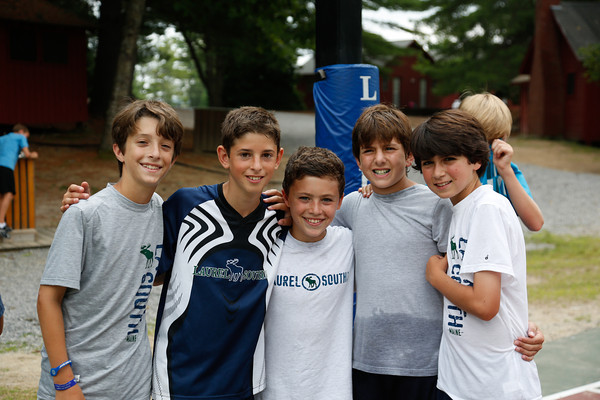
And, let’s face it, we know that seeing your children smiling together in a camp photo after hitting the refresh button a thousand times each day makes it all worthwhile for you. Those smiles are why you put them on the bus or plane each year. They’re why you post the photos to your on Facebook pages and pass them around, accumulating likes. You love hearing them asking each if they remember a certain time at camp or singing the same songs and doing the same cheers. In that respect, being able to send your children to summer camp together is special for you too.

What’s the Weather Like?

The popularity of summer camp has spread in recent years, now regularly attracting children from all regions of the United States and abroad.  For many of these campers, it’s their first trip to the Northeastern United States.  So, naturally, one of the most common questions we get at Camp Laurel is about the weather.  We’re not just saying this because we’re camp people: There couldn’t be a more perfect place to spend a summer than in the Northeast!

The coastal breezes keep the air pure at our Maine camps. Many of our campers and staff members frequently comment on how nice it is to be free of the smog of the big cities in which many of them live.  During the day, the temperatures are typical of summer weather.   Because Camp Laurel gets a coastal breeze, the temperatures tend to be a few degrees cooler than inland.  However, the summer sun still shines very brightly on the vast majority of the days, and it can get a bit warm.  We encourage campers to stay well hydrated, though, and wearing sunscreen is a must!  Shorts and tank tops or t-shirts are usually the most appropriate daytime attire.

We think that perhaps the best part of getting to spend our summers at camp, however, are the evenings. Temperatures cool down just enough to make most nights perfect for campfires and outdoor activities.  Most campers take a sweatshirt to their evening activities. They may not always need one, but it’s a nice thing to have around just in case.  Our favorite thing about nights at camp, though, is the sky.  Because our camps are in rural areas, there is very little light pollution, so you can actually see the stars!

While most of the country struggles with being not too hot or not too cold during the summer months, the weather at summer camp in the Northeast is just right!

Everything I Need to Know…

Robert Fulghum wrote a great poem entitled “Everything I Need to Know, I Learned in Kindergarten.”  Since so many campers and staff members often speak of all of the valuable things they learn at camp, we thought we’d do a tribute to Fulghum’s original poem, as well as to all present and former campers and staff members, with our own camp take on the classic…

Everything I Need to Know in Life…I didn’t learn in a classroom or in a book.  I learned it at summer camp.  I learned….

  • I can make good decisions for myself
  • Living with other people requires compromise.
  • Learning to say ‘I’m sorry”
  • Making my bed every day
  • Clean up my own mess
  • Don’t overpack!
  • Don’t take things that are not yours.
  • Write letters. People still love getting mail.
  • Trying new things is fun, even if they don’t turn out to be something you’d want to do everyday.
  • Sometimes being able to laugh at yourself is the best medicine.
  • Everyone should take the time to act silly —even grownups.
  • It’s okay not to be the best at something as long as you try really hard.
  • Just because you don’t succeed the first time, that doesn’t mean you should give up.
  • It’s not so hard to smile and say ‘hi’ to someone you don’t know.
  • New friends are great!  Old friends are the best!
  • Traditions tie us to others forever, no matter where we are in the world or how much time has passed.
  • You have the power to choose whether you have a good day or a bad day.  And even if your day doesn’t get off to such a great start, it doesn’t have to end that way.
  • No one wins all of the time.  It’s what you take away from the game that matters.
  • Having a routine is a really good way to stay organized.
  • Words CAN be just as powerful as sticks and stones, so think about what you say to someone else before you say it.
  • Judging people by what they look like or what they wear won’t get you very far in life, and you might miss out on some great friendships because of it.
  • Cheering for others is just as fun as being cheered on.
  • Every great thing comes to an end.  But the memories of it last a lifetime.

The world would be an awesome place if everyone went to summer camp!

Learning to Lose at Camp

Whether it’s a school spelling bee or a soccer game, as parents we want to see our children win not just to experience the joy of seeing them excel but because we know that they want to win.  Being raised in a competitive culture naturally makes us all want to be number one.  Children equate being number one with being the best.  However, as grownups we know that it’s impossible to win all of the time and that winning doesn’t necessarily mean being the best so much as being the best on that particular day.  The idea that losing, in reality, is closer to not winning in that it’s possible to “lose” yet gain something valuable from a contest or competition is one of the most difficult concepts for children to embrace.  Camp is a place where not only is this point driven home daily, but it’s a lesson learned at camp in a fun, constructive environment.

The pressure of anxious parents and coaches on the sidelines of sports competitions combined with the knowledge that school performance affects everything from what kind of classes they can take, extracurricular activities in which they can participate, and what colleges they will be  attend place a great deal of emphasis on children’s performance.  The ability for children to be able to process that good can come from not winning is clouded because the end goal is the emphasis.  The underlying message that children sometimes inadvertently receive as a result is that they will be valued or loved less if they lose.  Camp, on the other hand, emphasizes process and embraces novice.  One of the primary messages conveyed to campers is that winning is a great thing at camp, but it’s not everything.   Improving skills, finding activities one really loves, having fun and making friends are valuable attributes at camp.  In such an environment, winning
takes on less prominence.  Children are less likely to feel less valuable as campers for losing.

Camp leaders and staff work very hard throughout the summer to make sure this atmosphere is maintained. Children are encouraged for performance, accomplishment, and attitude regardless of being winners or losers in a contest.  Many special camp  games or competitions are also structured in a way that encourages children to work together in order to win and provide excellent opportunities for those children who may not be excellent athletes or extreme intellectuals to have their moments to shine.

Learning how to “not win” at camp makes it much easier for children to put “not winning” at home into proper perspective!

Play

We recently listened to a man who has spent many, many years studying the effects of play on humans. While it sounds a lot like our job as camp directors, he’s got the Ph.D. so we thought to give him our attention. We are glad we did.

Dr. Stuart Brown said several fascinating things about Play:

  • It overrides what is sometimes fixed in our natures – it brings individuals together in ways which allow them to expand their knowledge of others and the world around them.
  • If the purpose is more important than the act of doing it, it’s probably not play.
  • People who have not played with their hands (fixing and building) do not solve problems as well.
  • The basis of human trust is established through play signals. We begin to lose those signals as we age.

When you look at camp through the prism of these statements on play, you encounter a big ‘duh!’ moment. Watching our campers play together shows you how the common act of laughing together, or playing gaga, or chase, or different table games allows the kids to spread their wings and learn.

While we have a good bit of unstructured play at camp, there is also a great deal of play within teams such as soccer, basketball, baseball, dance teams, and more.  Campers build trust with their teammates, learn from mistakes, and are taught to keep a great attitude throughout their time at camp.

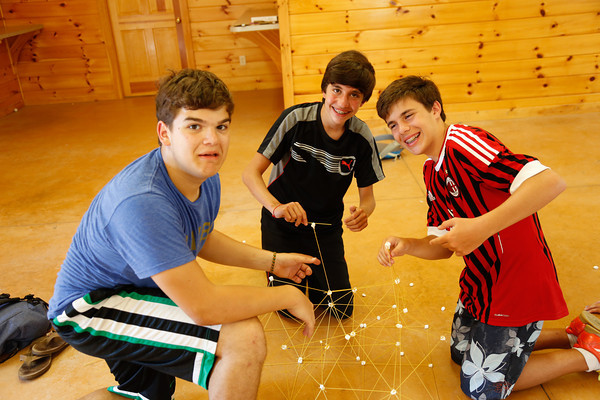
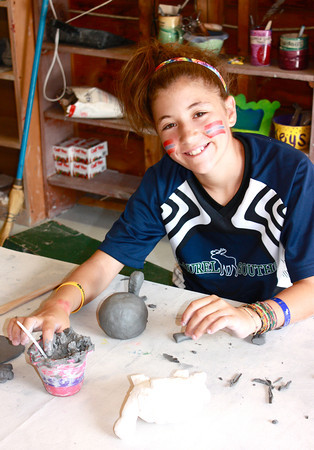
In woodshop, robotics, and ceramics, we give kids a great opportunity to explore with their hands and make, fix, and tear apart things they don’t normally at home. These experiences lead to wonderful outcomes both over the short and the long term.

Thankfully, Dr. Brown reminds us that we, as humans, are designed to play throughout our lifetimes. We couldn’t agree more. And, since play signals help build trust, we hire camp counselors who show the right mix of maturity and experience while keeping playfulness close to the surface.

We are excited to remain a place where play leads to several much needed outcomes: relationship formation, the development of confidence and independence, and a community in which campers know they are accepted. Whether through our traditions, choice based program, evening activities or during free time, our campers laugh and learn while playing!

Making Decisions at Camp

If your child regularly spends a half hour in the cereal aisle of the supermarket choosing his breakfast cereal or takes the better part of a day debating whether he wants to go to the movies or have a play date with a friend, there is a somewhat underrated and under appreciated aspect of sending your child to summer camp that you may want to consider.  Camp helps children learn how to make decisions.

For many campers, sleepaway camp is their first real experience away from their parents. They find themselves faced with decisions every day, some of which are traditionally made by their parents.  Camps, for instance, often offer campers several different dining options each meals.  Without their parents there to tell them to eat salad because they don’t like tuna or pasta, children find themselves faced with the decision about what to eat.  This sounds like a small thing, and in the scheme of larger things, perhaps it is.  However, it’s not an exercise without long-term benefit.  Once children understand the decision is theirs, they tend to get adventurous.  As a result, many will try—and be surprised to realize they like—foods that they might not have tried at home if steered toward safer choices by us parents who, let’s face it, sometimes choose the path of least resistance if for no other reason than to maintain peace.  The sense of adventure gained also carries over into their daily activities.

Most camps programs are designed around camper choice.  While the level of choice varies from camp to camp with some giving campers exclusive control of their daily schedules while others plan part of the day and allow campers to choose a couple or a few activities, campers are still faced everyday with choosing at least some of their daily activities.  Making such decisions forces campers to consider whether it’s better to stick to a tried and true activity that they love or try something new.  While some campers are inevitably more adventurous than others, the ability to make decisions without the pressure of peers or parents and in the open, accepting environment of camp at which being adventurous is not only accepted but encouraged, children learn to choose what they want rather than what they feel that others want for them.  Again, this may seem like a relatively small accomplishment in the larger scheme of growing up, but many books about success emphasize that the children who grow up to become the most successful adults learned early to understand what they wanted and how to make the choices in life that would help them achieve their goals.  Additionally, when children know what they want, they’re able to be more assertive in pursuing goals and voicing when they’re unhappy.

So if you’re tired of perusing the aisles for the second, third, and fourth time while your child tries to decide between Cinnamon Toast Crunch and Cheerios or are frustrated about not being able to make evening plans because your child can’t decide what he wants to do, consider sending him to summer camp where he can get a crash course on learning to make decisions on a daily basis.