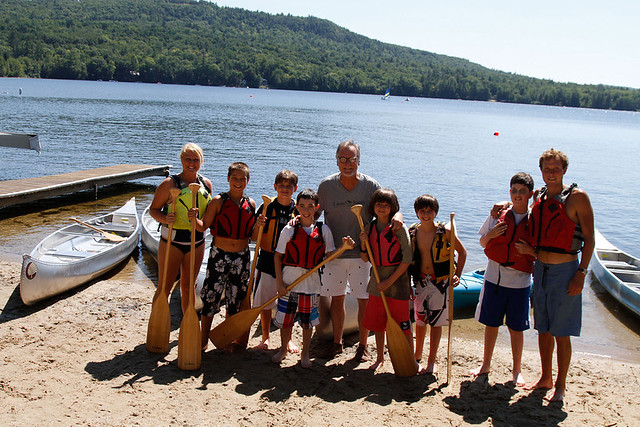

Summer Camp: Defining Routine and Ritual

Routines.  Everyone has them.  For some, they encompass everything that takes place from the time we wake in the morning until we go to bed at night.  For others, they come in short bursts throughout the day, such as at mealtimes or bedtime.  However, establishing routines as daily parts of our lives is important, especially for children.  Childcare experts agree that establishing regular routines for children is essential for healthy development.  The Center on the Social and Emotional Foundations for Early Learning reports that “Studies have documented that schedules and routines influence children’s emotional, cognitive, and social development.”

It’s no secret that summer camps provide loose routines that allow room for healthy creative development through structured daily programs and schedules that maintain consistent meal, activity, and bedtimes.  Maintaining a routine throughout the summer is also valuable in easing the transition from summer to fall and back into summer again.  However, one special aspect of summer camp that is often overlooked is that it helps children learn to understand the difference between routine and ritual—what makes one necessity and the other tradition.

Barbara H. Fiese, Ph.D., Syracuse University, defines routine as something that “involves a momentary time commitment so that once the act is completed, there is little, if any, afterthought.”  However, she defines ritual as “symbolic communication” that has “continuity in meaning across generations.”  Rituals take place within the home family setting.  However, for children, it’s not always clear how to tell the difference between what is done simply to be done and what is  done because it’s significant to their heritage.  This is where the summer camp ritual takes on a special significance.  Even executives such as Michael Eisner have publicly recalled the important role that summer camp rituals have played in their lives.

Summer camp often draws a distinct line between routine and ritual.  Campers understand, for instance, that cleaning their bunks or cabins everyday is part of a routine.  That following an activities schedule is part of routine.  That hearing TAPS in the evening to signal bedtime is a part of routine.  They, too, understand that campfires, however regular, are rituals.  They are more than just a fire that they gather around to eat s’mores.  Campfires have meaning that goes far beyond the fire itself.  The same can be said about opening night shows, closing, and fireworks.  Campers understand that these are not just routines done merely to achieve a goal.  They’re rituals that make their summer camp the place that it is and them a part of it.

By being able to tell the difference, children are able to accept routine as something that needs to be done and prevent rituals from simply becoming routine by understanding the value in them.  Dr. Fiese says that children will often revisit memories of rituals in order to “recapture some of the positive.” experience.”  This perhaps explains why so many camp rituals remain sacred to campers far passed their camping years.  Some of America’s Finest Summer Camps’ rituals hold special significance for campers and staff members.  At Camp Laurel South, Coves are definitely a tradition and time honored ritual:
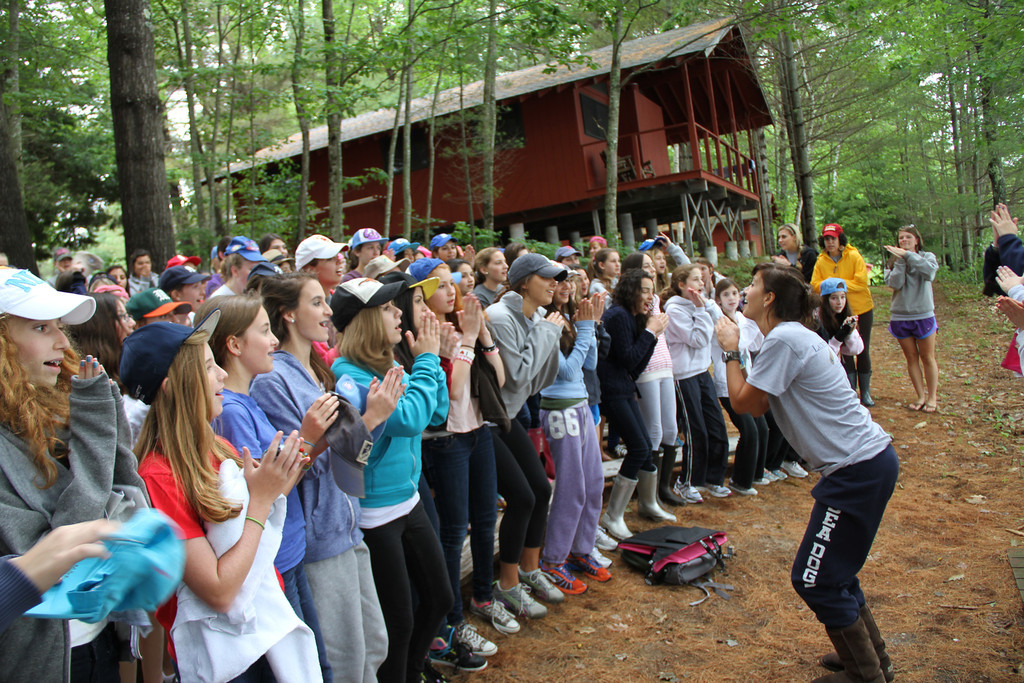
“Coves” are an important and exciting Camp Laurel South tradition.  Each day begins with a Morning Cove at a campus “Cove site.” Each group meets at their own Campus Cove location, where the Campus Leader reviews information for the day:  special activities, upcoming inter-camp games and tournaments, birthdays, cove-calls, cheers, sports scores, and many other special announcements. Each Campus Leader has his or her own style and flair which makes each morning Cove unique and fun. Cove is always a special time for the campers and staff and a great way to kick-off the camp day.

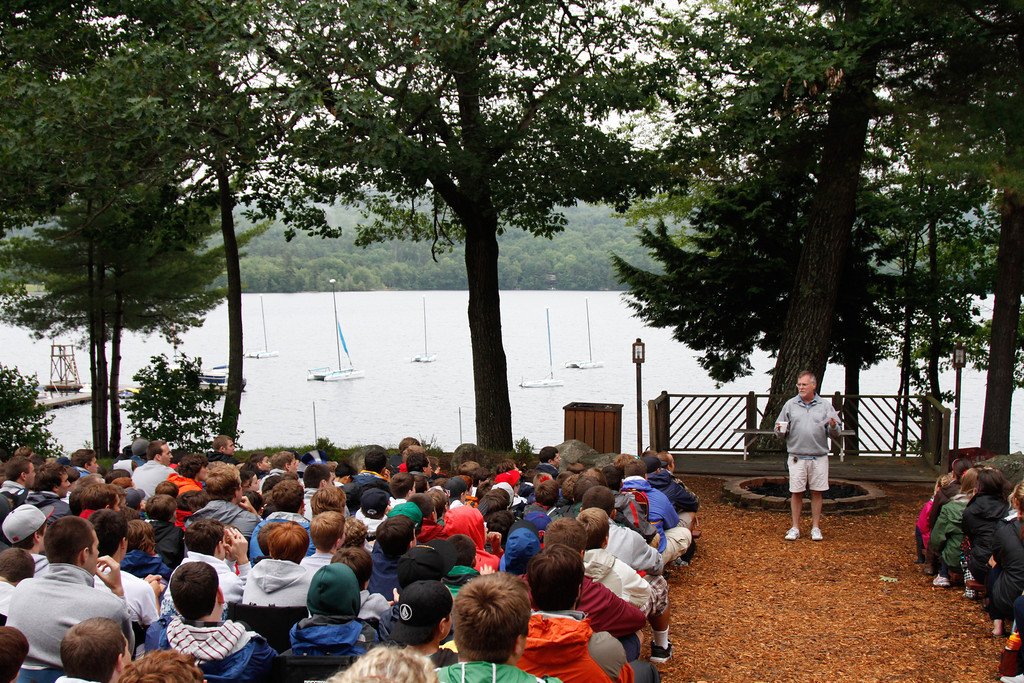
Every night…just before dinner…the entire Laurel South family gathers for Evening Cove, led by our director, Roger.  Evening Cove takes place at the Main Cove area, just above the magnificent shoreline of Crescent Lake.  Evening Cove has been taking place at this very site since the first campers came to Laurel South decades ago. Once we hear the words: “What a beautiful day in the state of Maine!,” the tone has been set.  Campuses may have a cheer to present…a birthday may be celebrated…Inter-camp results and special achievements or accomplishments are recognized…Evening programs are reviewed…special accolades are shared…Whether in the morning or evening, Cove is a coming-together, a celebration and recognition of how lucky we are to be at Laurel south in the beautiful state of Maine!!!
A Look Behind the Scenes

Every day, we rely on a several teams of individuals to make camp happen.  Everyone knows about camp counselors, the people on the front lines, but not everyone is aware of the people who work behind the scenes to make sure everything runs smoothly.  Running a summer camp really is more than showing up in June ready to welcome campers and have fun.  There are a myriad of staff members who perform the often thankless job of working “behind the scenes” at camp.  They are a very diverse group of individuals.  Some of them answer the phone when you call the camp.   Others schedule daily activities, arrange transportation, or cook the food.   Still, others take care of your children when they’re not feeling well, or look into your concerns about their daily lives at camp.

The fact of the matter is that summer camps require individuals of many interests and talents to operate successfully, and the measure of a good summer relies on the abilities and passions of these individuals.  They often work long hours, from sunrise until the wee hours of the morning simply because they love camp.  If you ask any one of them, they’ll tell you that they do what they do because, in the end, it contributes to a successful summer for campers and their parents.  They also might be a little coy in admitting that it’s just plain fun for them.

Furthermore, these people are so good at their jobs that we don’t even adequately know how to thank them.  They work with passion and without regard to anything but making sure our campers and their parents have the best possible experience at our camps.  It truly is a thankless job , in many ways, to work behind the scenes at an American summer camp.  But we are thankful!

“Sports Camp” Isn’t Just a One Sport Term

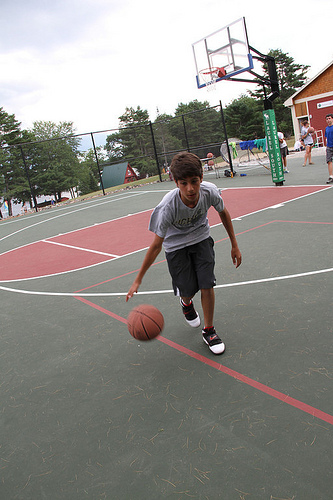
It’s no secret that summer camps offer campers the opportunity to sample many different sports, but what may not be evident is why this may be preferable to sending children to a camp at which the focus is exclusively on one sport.  Dr. Jared Wood, a sports psychologist, believes children should be encouraged to try many different sports in order to find their favorites.  He warns that focusing on one sport too early in youth often “unnecessarily limits a child’s interest and skill development.”

Many child development experts recommend that children be given the opportunity to try out a sport before committing to it because it’s important for them to develop their self esteem prior to joining a team and engaging in intense training.  When children enter a sport with confidence, they’re more likely feel that they can do well and, therefore, strive to do well.  Many summer camp sports programs subscribe to this recommended combination of skill instruction and giving children the opportunity to use those new skills on the field or court.  Summer camps also emphasize skill development over winning or losing.  Campers learn sports skills in a supportive atmosphere and are taught by specialists who are proficient in their respective sports  Many summer camp sports programs are headed by college or high school coaches who lead counselors who played at the high school and college level.  This type of approach permits campers to try out various positions and get comfortable with the rules and general flow of a sport without feeling pressured to do well by overly zealous parents and coaches.

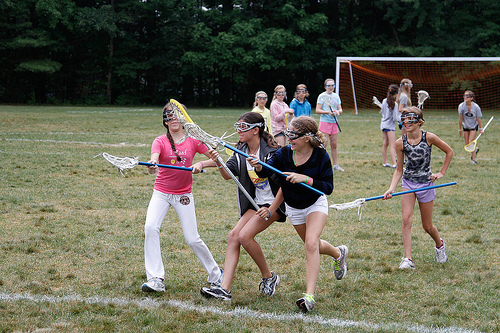
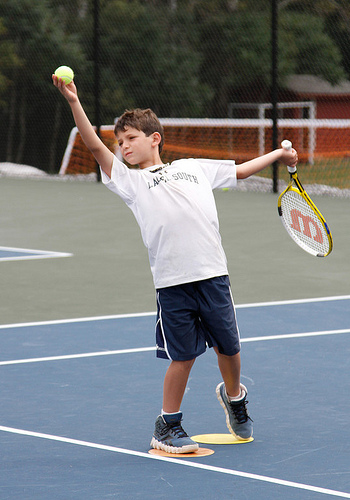
Another benefit of summer camp sports programs is that they offer a healthy mix of team and individual sports.  Child experts point out that some children prefer and perform at their best as part of a team while others are happier and better off playing individual sports.  By being able to simultaneously sample tennis and lacrosse, for instance, campers can get a feel for which one leaves them feeling the most motivated to further develop their skills while still being able to have a healthy appreciation for the other.

The variety offered at summer camp also gives campers the opportunity to try sports to which they may never have been exposed or would not otherwise have the opportunity to try.  Many a camper has tried a sport for the first time at summer camp and then gone on to play on a travel team, high school team, or even a college team.  Sports psychologist and author, Richard Ginsburg, Ph.D., suggests that children should be at least “12 or 13” before being encouraged to commit to one sport.  Dr.  Wood agrees, “It’s pretty clear that early specialization is much more likely to lead to burnout than it is to a scholarship or Olympic medal.”

So when you’re determining which type of summer camp is right for your child.  Consider the benefit of a summer camp that offers a diverse array of sports that will permit your child to sample a variety of choices.

A Special Place for Boys and Girls

For older campers, one of the most profound and lasting advantages of camp is the opportunity they have to focus on being boys and girls.  Many summer camps also strengthen the safety of the camp setting by offering exclusive programs that help teenage campers gain a better understanding about how to best grasp the transition from being girls to being women and from being boys to being men.  Such programs provide non threatening forums for teenage girls and boys to address sensitive issues and topics as well as help them prepare for their later teen years as they near college and adulthood.  These programs also have their own rites and traditions that serve as progress points for individuals as well as groups and as the basis for the point at which camp friends become a lifelong support network.

Many camps, even co-ed ones, also operate separate programs for boys and girls regardless of age.  They have their respective sides of camp, their respective program areas, and their respective activities.  However, they come together for meals and many evening camp activities.  Many believe this approach is a bit part of why children are afraid to relax and even be silly while at camp.  Being with children of the same gender frees them of stereotypes that may be placed on them elsewhere.  Spending exclusive time with other girls or boys creates a non threatening environment, particularly for adolescents and early teens already going through awkward changes as they begin to maneuver the sometimes tumultuous teen years.  Girls can get down and dirty in an intense game of flag football and boys don’t feel the need to look over their shoulders while bouncing around in the camp’s gymnastics area or putting together some choreographed moves in the dance studio because it’s all just a part of camp.

Lots of Fun During Staff Orientation!

Staff Orientation has been amazing and the weather has been spectacular. With counselors now assigned to cabins, we are focused on learning all about our wonderful campers, learning the Laurel South culture, readying the cabins and program areas and bonding as a cohesive unit. Camp looks great. In fact, the only thing that could make it look better is the faces of 400 campers arriving this Thursday!!! We can’t wait to see you!

It’s Almost Here…

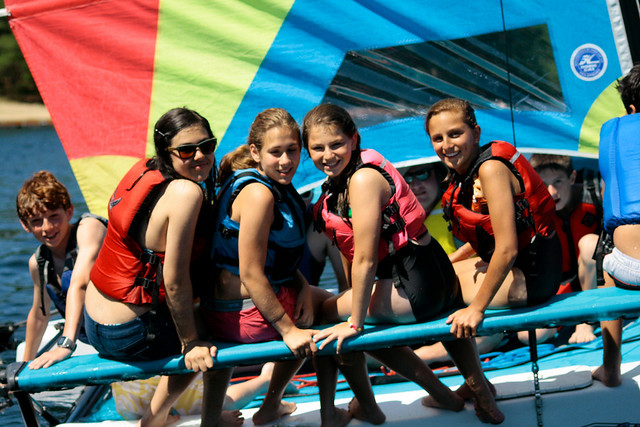
Look at the horizon. What do you see? Camp!Sailing

The big day is near. Soon, your child leaves home for a summer of fun, excitement and growth.

Scary, isn’t it?

Sure. New experiences usually are. But we’ve got some ideas to help.

Talk with your child. And we mean “talk honestly.” It’s great to chirp about the wonderful days ahead. But be sure to acknowledge that fears and worries are okay.  They’re normal.. Let your son or daughter know that everyone – even you! – gets nervous before doing something different. Remind your child that directors, campus leaders, counselors and staff members know about nerves – and they’ll be there to talk, day or night.

Campus TimeDon’t say, “And if you get homesick, you can come home!” Though reassuring, it sends the wrong message. It focuses on the negative – and undermines the idea that you’ve selected that camp because you trust the directors and counselors so much. Emphasize instead that while homesickness is normal, it goes away – and everyone at camp will help make it disappear. (It’s also a good idea to not say too much how much you’ll miss your child – or how badly everyone will feel that they’re not at the annual 4th of July fireworks or family reunion.)

Prepare together. Read the packing list with your child. Go shopping with him or her. Your child will pick out items he or she really likes – while at the same time sharing a quiet, unhurried conversation about camp.

ArcheryReinforce camp policies on things like cell phones. You may want to give your child a phone to call home “just in case” — but that’s the wrong “call.” For one thing, it contradicts what you’re saying about the counselors’ and directors’ ability to help. For another, it encourages “bending the rules.” For a third, it shifts your child’s focus from having fun and making new friends, to sneaking off and being alone.

Don’t let your own anxieties affect your child. As a parent, you may feel trepidation too. You’ll miss your child – and fear you’ll miss out on his or her growth. That’s natural. But don’t burden your kid with those thoughts. Tell your spouse and friends instead!

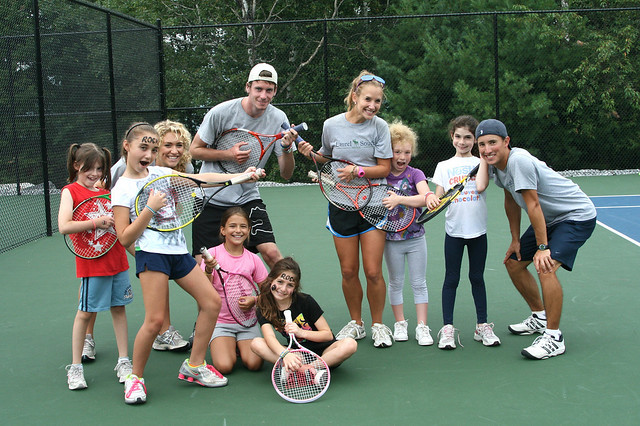
TennisCamp is a time of independence. Of spreading wings. Of making new friends, forming strong bonds and creating vivid memories in a non-family, out-of-school environment. The days leading up to camp may be anxious – for campers and their parents. But the rewards will be well worth a week or two of very normal nerves.

We can’t wait to see your son or daughter at camp!!!

The Pine Tree State

Maine Camp Experience - GirlsSummer camps got their start in Maine. A century later, they’re still going strong. The Pine Tree State now boasts 100 premier institutions – including The Laurel Camps (Laurel and Laurel South.)

We’re proud to call Maine home. We’re just as proud to utilize the resources of the entire state and to give hundreds of campers an experience unequaled anywhere else.

At The Laurel Camps there’s more than enough room for an exciting depth and breadth of activities. Sports ranging from baseball, soccer, softball and lacrosse to volleyball, tennis and archery.  Equestrian.  Swimming, sailing, canoeing, kayaking, wakeboarding, windsurfing and waterskiing on crystal-clear lakes.

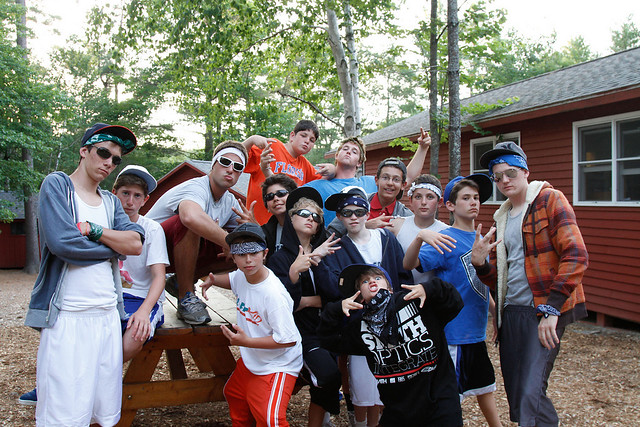
Maine Camp Experience - BoysSummers in Maine are never too hot. And the nights are cool (and starry) enough for age-old traditions like campfires and s’mores.

But for campers and staff at Laurel and Laurel South, all of Maine is our playground. We hike tall mountains like Katahdin. We head into the pine forests for ropes courses, rappelling and mountain biking. We explore the coast and ocean-side sites like Acadia National Park, Ogunquit and Bar Harbor.

Campers come to Maine from across the country. Whether they’ve been here in the winter to ski, or have never experienced the wonders of the state, they quickly realize it’s an amazing, magnificent place – vast yet intimate, wild yet welcoming.

Parents love it too – particularly if they plan a day or three in the trendy city of Portland, with a side trip to Kennebunkport, Camden or (of course) Freeport to visit L.L. Bean!

It’s all part of the Maine camp experience – discovering new things, no matter what your age. And you never know…you may be lucky enough to spot a Moose.

Roger and Dagni
Camp Laurel South