
A Summer Camp Daily Food Schedule

“What about food?”
This is undeniably one of the biggest questions posed to summer camp directors from prospective parents who not only want to know what their children will be fed during the summer, but when and how.  Although serving styles vary—some camps eat “family style” while others serve buffet style–a day of food is fairly similar from camp to camp and an important aspect of the daily camp schedule.  So America’s Finest Summer Camps has decided to dedicate an entire blog to a typical camp eating schedule.

Shortly after waking up in the morning, campers head off to breakfast. Aside from a hot entrée  choice such as eggs, pancakes, french toast  or oatmeal, several cold staples like cereal, bagels, fruit, and yogurt are also available to ensure that campers have plenty of fuel for morning activities.

Around mid-day, everyone takes a break from the fun in order to eat lunch, which is usually the same fare they might expect to eat for lunch at home like pizza, macaroni and cheese, or sandwiches.  A soup and/or salad bar is also typically available.

Many camps also offer fruit or a snack in the late morning or afternoon, to keep campers energized throughout the day.
.
After a full day of adventure, campers need to re-fuel, and dinner fare appropriately reflects that. As with lunch, the choices are typical of what they might expect to eat at their evening meal at home such as pasta, meat and potatoes, tacos, etc.  A large salad bar is also typically available at dinner, and dessert is served as well.

Before going to bed, children often get a snack or a chance to go to their camp’s canteen for a special treat.
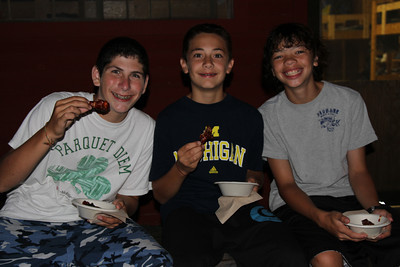
In addition to the primary meal and snack schedule, throughout the day, children may enjoy other snacks or treats while participating in their camp’s cooking program, during a bunk or cabin mate’s birthday celebration, or as part of a special event.  It should also put parents’ minds at ease knowing that when constructing their menus, many camps purposely design meal combinations that quickly replenish energy and/or consult nutritionists.

Food allergies are also typically addressed.  Many sleepaway camps do not serve any tree nut products and those that do take great strides to insure that campers with allergies do not come into contact with them.  Some make soy milk available to those with lactose intolerance and/or provide special gluten free bread to those with wheat allergies.

Camp meal schedules are also extremely important to the daily camp schedule because they help campers and staff mark time throughout the day.  Since meals and snacks are served consistently at regular times, they contribute heavily to summer camp routines and help campers define their expectations.
The Subtle Pleasures of Summer Camp

Have you noticed subtle pleasant but odd changes since your children returned from summer camp?  Have you peeked into your son’s room and noticed that he made his bed?  Were you tempted to take your daughter’s temperature the other night because she volunteered to clean up her room?  Maybe they just seem calmer or are better about sticking to routines about which you went hoarse more than once preaching to them before you put them on that bus or plane headed to their favorite summer zip code.  Perhaps they’re better about saying ‘thank you’ and ‘please’ or spend less time all out at war with each other over little things like the remote control and whether they’re going to watch The Voice or Modern Family.  Did they really mature that much at summer camp?

Not that you’re complaining.  It’s a nice, unexpected bonus.  When you initially enrolled them for camp, you were thinking it would be good for them to spend their summer working on arts and crafts projects, learning how to sail, going swimming, doing the silly things that kids do at camp, and playing sports instead of using up your entire cell phone data plan during twelve hour texting marathons or playing the Kinect so much that you can no longer tell whether you’re watching a video game or an actual television program.  You thought, ‘Maybe they’ll even make a few new friends.’  But, oddly, it’s the smaller things they seem to be bringing away from their summer camp experiences that you find yourself enjoying the most.

Sure, you read all about the benefits of sending children to summer camp before you decided to send them.  But you didn’t allow yourself to actually have expectations that your children would come home friendlier, more dutiful, more flexible, able to manage their time better, and generally happier–in short, more mature. Those are the special changes that you enjoy seeing and that make summer camp that much more valuable your eyes.

Ask Me More about Camp

Raise your hand if this sounds familiar…
Your child comes to you and says, for what seems like the billionth time, “Ask me more about camp.” It’s now December and you’ve heard some of the stories so many times that you can actually recite them along with her.  You wonder what odd but amusing little story your little one has managed to scour from the back of her mind that somehow involves the solitary five minutes of summer camp about which you haven’t yet heard.  While you’re doing this, your child only grows more impatient, “Go ahead.  Ask me,” this time becoming so excited that she hops up and down a couple of times and appears to be choreographing her own little “ask me more about camp” dance, which somewhat tops the bemusement of the time she sang for you to ask.

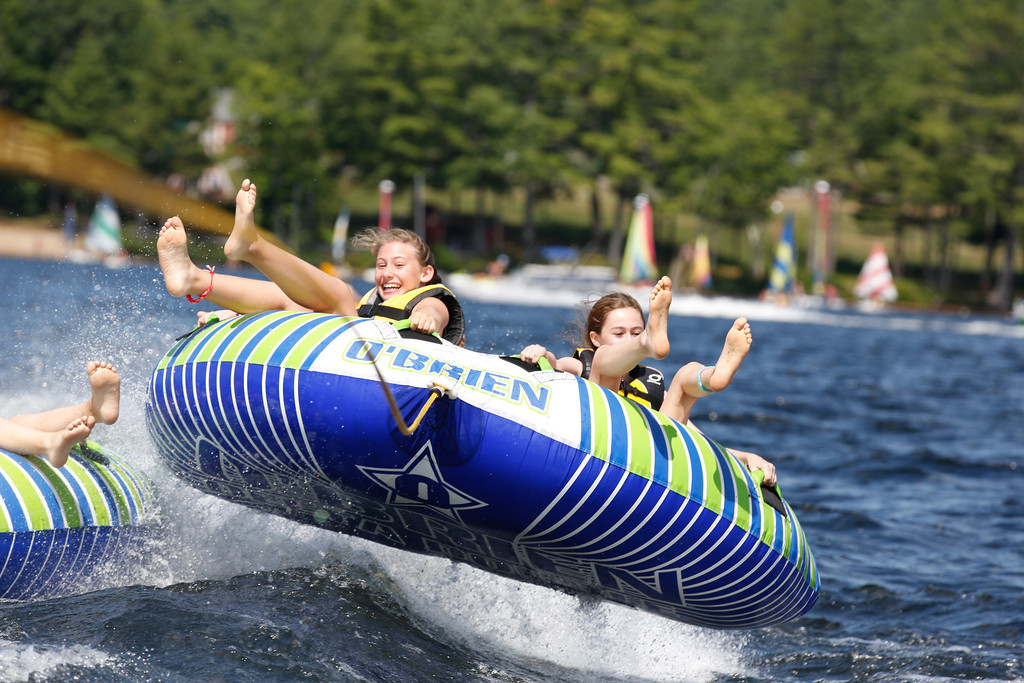
You can’t resist her enthusiasm because you think it’s great to see her this excited about anything other than the latest episode of iCarly, so you cave and wait for her mile-a-minute relay of some cute story about that time she held hands with six friends and they all jumped off the water trampoline and made a really big splash, which was really funny because it made so many waves that it almost tipped over a paddleboarder nearby…No, really it was SO funny!  Or the time they went on the nature walk, and it started raining, and they were trying to hurry back to camp, but they slipped in the mud…THAT was the funniest! You’re still trying to get the stains out of the shirt she was wearing that day, but you get an image in your head, having seen the photographs of your child and her friends covered in mud the camp posted on its website, and knew from the ear-to-ear grin that she was obviously having the time of her life, and you have to chuckle because, yes, it’s funny.

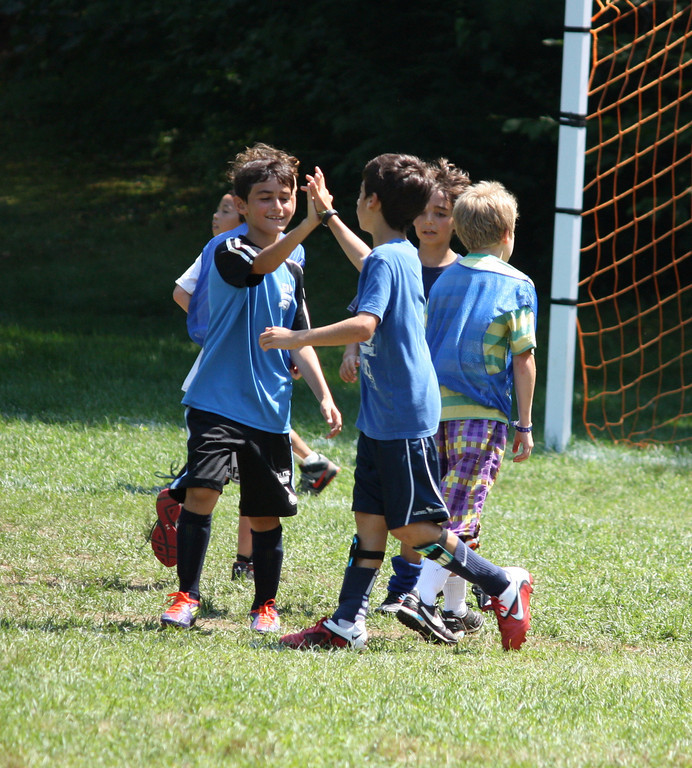
Your child starts a new story about a soccer game and how her friend had really wanted to score a goal all summer at camp but really wasn’t that good at soccer, so she blocked another player so the friend could try to score. And you realize that even though you might get asked to quiz her about camp a few hundred more times before the line turns into “I can’t wait to go back!” you don’t mind because you realize that hearing about little moments like this is nice. Not only did your child just have the time of her life, her enthusiasm in sharing her experiences with you adds great value to your decision to send her to camp because not only is she having fun but she’s learning valuable life lessons.

Choose Your Own Adventure at Summer Camp

There is a new trend sneaking into summer camps.  An increasing number of sleepaway camps are foregoing the traditional pre-determined summer camp schedule in favor of giving campers complete control over their summer camp experience.  This approach to summer camp has become  a particularly popular approach to the summer camp experience at session camps, which tend to attract a less traditional family of campers than seven week camps.  And the appeal is mutual.

Allowing campers to customize their experience gives them the opportunity to experience a traditional summer camp while enjoying many of the same benefits that they might enjoy by attending a specialized camp.  It’s truly a best of both worlds scenario, and the response has been overwhelming.

There is certainly no shortage of children who want to experience summer camp.  The conflict seems to arise from increasingly busy summer schedules and the pressure placed on children to be great at—well—everything.  Despite our inclination as adults to want them to be everything we are and more, along with everything we are not, children need time and space to be…children.  Enter the session sleepaway camp, an environment catered to letting them be themselves while improving their skills in those activities they love while giving them ample opportunity to try out new ones in shorter, more realistic segments for the busy family.

In addition to having freedom over their activity choices, the independence children gain while at summer camp is also a great way of letting them try out their wings. For many children, camp is their first experience away from their parents.  It’s the first time they’re choosing their own clothes, deciding what to eat, determining which activities to try, and learning how to be part of a social network without the assistance of mom and dad.  For those children not quite ready for the full summer experience, a session camp is the perfect way to give camp a test drive.
So if you’ve hesitated to enroll your children in summer camp because you’re afraid it’s too much structure, or if you’ve been thinking you would like them to learn how to be a little bit more independent, consider a session summer camp.  It just may be the perfect fit.

Learning the Value of Tradition at Camp

The holidays are around the corner.  During that time of year, the word “tradition” gets thrown around a lot.  But how many people actually understand what tradition is really?  Perhaps it’s the emphasis on forward thinking and constantly in-motion global community that has caused many to confuse “tradition” with “routine.”  They’ve both become something that we do on a regular basis in order to establish or maintain a consistency or pattern in our behavior.  So what really distinguishes “tradition” from “routine”?

First, routine is something that one person does but might not necessarily have in common with others.  Most people brush their teeth at some point in time in the morning.  Few people do it at exactly the same time.  Some shower first.  Others eat breakfast.  Eventually, everyone brushes their teeth but the experience is, for all intents and purposes, individual.  There is no shared significance.

Tradition, on the other hand, is by definition community oriented.  It’s a shared custom, belief, or activity with a common understanding of the reason for its practice.  Many of us eat turkey at Thanksgiving because we symbolically associate it with that first meal between the pilgrims and native Americans.  It’s a tradition.

Second, routine, unlike tradition, is not necessarily multi-generational or even long-term.  It’s something done for a specified length of time.  While we maintain some routines for all or much of our lives, others are short term.  If one gets the flu, for instance, one might temporarily take up a routine of antibiotics.  But once the flu subsides, so does that routine.

On the other hand, tradition is something that is a common bond between multiple generations.  It’s an acknowledgment that an event or action was significant to someone tied to our past, and the observance of traditions our way of paying tribute to that event or action as well demonstrating our understanding of it.

Finally, routine is task oriented.  We take up routine in order to accomplish a goal.  There is an intended result in routine.  Tradition, however, is an observance.  Routine is a way of moving forward, whereas tradition pays tribute to the importance of the past.

By now, you’re surely asking yourself what any of this has to do with summer camp. Simply this: in a culture that places a significant amount of importance on the establishment of routine, the value of tradition is increasingly less understood and appreciated.  Summer camps, however, are grounded in tradition.  They’re  a place where campers and staff members alike get refresher courses in the power of tradition.  Whether it’s at a campfire, a sing along, or an activity specific to the camp, there are literally hundreds of opportunities every summer for those at a summer camp to bond through tradition.  Many former summer campers and staff members actually name “tradition” as one of their highlights of summer camp.  So if tradition has become an element of holidays past, consider giving your children a future opportunity to enjoy tradition at summer camp in 2013.

Re-asserting “Team” in Team Sports

Whether your family lives in a large city or a small town, there is likely not a shortage of organized sports  for children. Increasingly, the emphasis of team sports is less about what it means to be a member of a team and more about being the MVP of a winning team.   As a result, child athletes are often caught between sparring parents on one sideline and anxious, screaming coaches on the other.  Overly zealous parents and coaches seldom stop to consider that children often absorb their parents’ feelings and may project the resulting tension through their play.  The immense pressure to be a star who constantly wins is often why many children become burnt-out in the competitive sports environment and choose to take a break or even quit altogether.  Says Fred Engh, author of Why Johnny Hates Sports, “If all the focus is on winning, kids may be scared to fail and make mistakes. Mistakes are part of the learning process and it’s how one improves.”  One of the most undervalued benefits of team sports at traditional American summer camps is the environment that allows children to make mistakes without fear of backlash from the sidelines and to process those mistakes in a way that they can turn them into learning experiences.

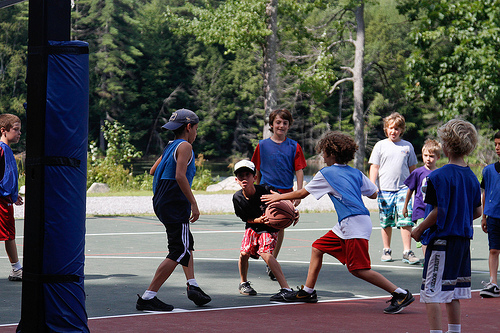
Setting up children for success requires a welcoming environment in which they can feel comfortable being themselves.    Those who tend to be self-conscious are particularly challenged by situations in which tension runs high.  The spirit of camp is one of instruction, fun and safety more than competition.  It’s about making children feel like a valuable part of a unit that utilizes everyone’s talents in a way that is beneficial.  In short, the traditional summer camp environment is a team environment.   At camp, children have the encouragement of their counselors and fellow campers when playing sports.  A child making a layup shot on the basketball court for the first time is cheered just as much as someone scoring a winning three pointer.

Perhaps the relaxed positive reinforcement they receive while learning to play sports at camp is why so many children (as many as 60%) feel compelled to continue being active in an activity they tried for the first time at camp.