
What Do We Really Do All Year…

For camp directors, July and August are hectic, exciting, fun-filled and challenging months.

So what do we do the rest of the year? The question should be: What don’t we do? Camp directors work as hard in the “off-season” as they do during actual camp sessions. Some of it is visible to campers, parents and staff members – but much of it no one ever sees.

The old days – when camp directing was a summer job for teachers – are long gone. Camps today run 24/7/365. I know I speak for my fellow camp directors when I say: We wouldn’t have it any other way.

Here are just a few tasks that demand our attention, beginning the moment the last bus pulls out of the parking lot.

Roger and DagniClosing down camp. Equipment must be put away, docks pulled in, cabins and kitchens cleaned. Winterization begins in August.

Construction begins on new projects we, and many camps, do each year. There are buildings to be built, courts to be resurfaced, roofs to be re-shingled…the list is endless. This is exciting stuff: planning, building and getting new facilities, cabins and program areas ready for the following summer! Returning campers and staff love “being in the know,” and hearing what’s new and improved for the coming season.

Camper recruiting and retention. Working with families is a fun process. We arrange meetings, talk by phone and email, get together – and we do it more than once. Camp/family relationships are very important, and ongoing. You may be surprised to learn that this winter, we’re already talking with families about their 2012 plans.

Camping conferences. These are where we learn about everything from insurance regulations and ADHD research to cool new foods and safe new beds. We meet our colleagues, share ideas, and get re-energized about the upcoming summer. 

Leadership meetings. Like many camps, our full leadership staff gets together during the year. We review the past season, prepare for the next, and constantly take stock of who we are, where we’ve been and where we’re going.

Program planning. We spend 10 months getting ready for a 2-month special event. From scheduling trips to making sure the daily routine does not become a rut, we plan every detail. Longer-term planning includes major building projects.

Meals. The food service calendar is incredibly complex. From the first dinner in late May for 25 people through late June when 550 campers and counselors suddenly need three meals aTri-State Camp Conference day, snacks, canteen, OD snacks, cookouts and more… the food service staff is crucial. Training the staff, planning menus and getting meal counts right takes a ton of off-season “prep work.”
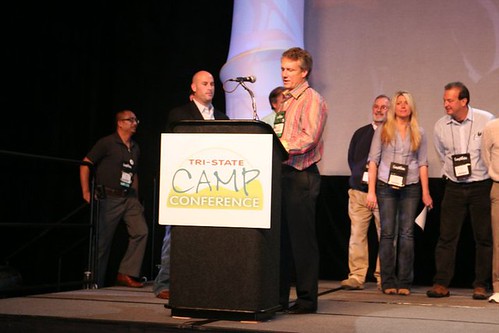
Everything else. Here are a few of the thousands of items: making a laundry plan. Writing and sending out newsletters. Reserving buses. Distributing DVDs. Revising our staff handbooks and training sessions. Renewing all necessary certifications. Updating technology. Tracking medical mailings. Writing blogs.

Our goal as camp directors is to control as much as we can when campers and staff are home – so that when they’re at camp we can devote as much time, energy and care to them as we can.

Now, if you’ll excuse me, I’ve got a phone call to answer. An email to respond to. And a potentially great new counselor waiting to be interviewed.

Roger Christian
Director, Laurel South

A Summer Full of Adventure

Few people think of finding a summer job while bundled in scarves, coats, and gloves as they attempt to maneuver roadways and college campuses after the latest snowfall.  However, whether 2011 is the first time you’re considering a summer camp position or you’re a seasoned veteran, February is exactly the time to start the process of securing summer employment, if you haven’t already done so.  Many camps attend campus recruiting fairs in order to assemble the perfect staff.  So why should you attend one of these fairs or complete an online application now?  To begin with, a camp job is definitely fun, but also a lot of work…so be prepared! Where else can you get paid to play all day while building valuable job skills? Whether you work in a specific area and focus on a sport, activity or hobby you love or you work as a counselor who travels from activity to activity with campers, your day is full of exciting challenges and a probably even a few surprises, both of which will develop your problem-solving, critical thinking, and negotiation skills.

If you like working with children and aspire to a career in a field such as education, sports training, psychology or sociology, then you already have another reason to work at a camp.  Camp is an excellent place to gain valuable experience and is impressive on a resume.  Although camp seems lighthearted–and it is in many ways–working at camp requires a lot of responsibility, flexibility, and adaptability, all of which are very valuable characteristics sought by employers.   Each day guarantees new challenges, many of them unexpected.  Summer camp is often organized chaos.  Yes, there is always a plan in place, but the unexpected is also inevitable.  While this may seem scary the first couple days, it also brings an excitement and satisfaction that delivering pizzas or serving food (or even working at an investment bank)  never could.  Working at camp also requires a lot of communication and interpersonal interaction, two more transferrable skills that are highly valued by employers.  At camp, you must effectively co-exist with your campers, co-counselors, and other staff members to be successful.   You will also be able to tell future employers that you worked with people from all over the world and from many different socio-economic backgrounds.  That you’ve overcome cultural, language, and social obstacles with others tells recruiters that diversity is not something you fear, but rather embrace.

Working at summer camp can also be very healthy for your bank account.  You won’t become Donald Trump spending your summers at camp. However; camps provide housing and food in addition to a salary. It’s possible to live virtually expense-free for a couple of months.  Many summer camp counselors take home all or most of their salaries at the end of the summer.

Finally, you will form lifelong friendships at camp.  You may arrive alone and nervous in June, but you will leave in August with literally hundreds of friends from all over the world.  Two months may not seem like a long time, but when one lives and works in close proximity with co-workers, it’s more than sufficient to form bonds that ordinarily would take years.  There are always  tears on the last day of camp, not only when saying goodbye to your campers, who will have secured a special place in your heart forever, but to co-workers—the ones you know you will see again as well as the ones you know you will not.  Regardless, the world will seem like a much smaller place to you.

Though it may seem early to begin planning such a special adventure with so many possibilities, building a successful camp staff not only requires individuals who possess all of the qualities previously mentioned, it requires finding the right mix of personalities and talents.  Such an endeavor, of course, takes time.  Camp recruiters review literally thousands of applications each year and speak with hundreds of candidates to find those who are the best fit for their camp’s atmosphere, philosophy, and program.  Starting your job search while the ground is still white and the tree branches still bare provides you with the advantage of a larger pool of positions from which to choose.  By April, most camps have nearly completed their hiring and only difficult to fill or highly specialized roles remain.

So, after a winter of wading through piles of snow, are you ready for a summer full of adventure?


I can do it myself!

While no actual human being develops in the precise sequence of a child development chart, new parents quickly learn that children do go through dramatic stages. Like other skills, becoming self-reliant takes time and can only develop through real time.

To begin with, parents often track all the “firsts” that a child achieves on a daily basis but as the list grows longer we come to expect changes. The way that most young children acquire language and skills is so rapid that later—even when parents are getting a little more sleep—it becomes difficult to remain excited about each previous new word or action! However, there is one stage that most parents don’t forget and that’s when a child starts declaring, “I can do it myself.” All of a sudden, totally dependent infants morph into adamant creatures with distinct needs and wants. This exasperating but essential stage is filled with cute moments when children seem to hover between babyhood and childhood. But it can also be a difficult time for some parents if they fear that their child may not need them any longer.

As children mature, they continue to develop and require more experiences where they can make independent choices without parents. If parents don’t allow children to make decisions and do things on their own, they won’t develop confidence or realize that they are not just extensions of their caregivers. It’s a tricky line that parents walk! Sometimes giving children room to spread their wings seems counter intuitive, but in order to grow into a self-reliant adult, children need to struggle without the offer of a quick fix. Even when parents can take care of things, the better choice is to support a child through the process of working through and solving problems. Long after a problem has been forgotten, a self-reliant child will remember hearing, “Wow! You amaze me! You really worked hard to figure that out.”

A child who is self-reliant can think for themselves, trusts their own judgment and feels in control of their life. This leads to becoming more active, independent and competent adults and citizens. The child also develops skills to draw on inner resources and use coping mechanisms even when they feel things are not easy. Sending a child to camp is a perfect way for a child to further develop self-reliance in a nurturing, safe and supportive environment. The whole camp experience is designed to illustrate to the camper that becoming a successful person takes personal strength as well as playing a role in a larger group–with the emphasis always on FUN. I can’t think of a more wonderful childhood experience for facilitating such important life skills!

Of course, the process of becoming self-reliant is not easy, but that’s where camp staff and counselors are there to help your child adjust and learn. If you wonder how to help your child develop self-reliance, remember that each child comes to conclusions for themselves, so the only way to experience camp is to be a camper. They are building on early determination to “do it themselves,” and those first fierce moments of independence are precious. Camp offers a full range of fun, adventure, and opportunities to experience emotions with different adults and in new, safe situations. By the end of summer camp, campers bring a lot of stuff home. There’ll be great crafts, stories to tell and some inevitable laundry to wash—but every camper in the world—also brings home a new understanding of themselves.

How did you learn self-reliance at summer camp and what strategies helped you support your independence? Which experiences do you think especially helped kids develop inner strengths? We look forward to your stories too!

Emma, Guest Contributor

Thanks for the image AmberStrocel.