

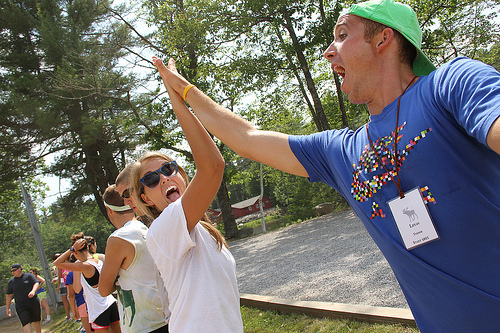
 One of the most touted benefits of working at a summer camp is the network one may build even within the parameters of a single summer. Unlike many work environments, which tend to draw locals with a telescoped set of talents, summer camp attracts staff from virtually all over the world who possess an array of abilities. A successful summer at camp requires the expertise of athletes and artists alike. Because summer camps are 24/7 communities, staff members tend to form very close bonds within the two months that they reside at camp each summer. Camp breeds a sense of family, which is precisely why, for a good many staff members, goodbye at the end of the summer is seldom goodbye forever. Thanks to a little help from social media outlets such as Facebook, it’s possible to stay in touch with summer camp friends no matter where on earth they live. Whether it’s couch surfing while traveling, hunting for a job, needing a little bit of advice or support, or sharing an inside joke, camp friends are there. Working at summer camp is more than just a summer experience. It’s a way to form a global network of friends for life.
Category: Uncategorized
Re-asserting “Team” in Team Sports
Whether your family lives in a large city or a small town, there is likely not a shortage of organized sports for children. Increasingly, the 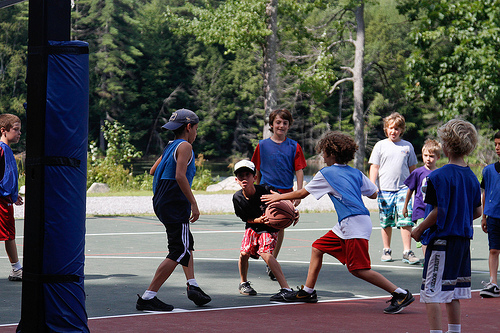 emphasis of team sports is less about what it means to be a member of a team and more about being the MVP of a winning team. As a result, child athletes are often caught between sparring parents on one sideline and anxious, screaming coaches on the other. Overly zealous parents and coaches seldom stop to consider that children often absorb their parents’ feelings and may project the resulting tension through their play. The immense pressure to be a star who constantly wins is often why many children become burnt-out in the competitive sports environment and choose to take a break or even quit altogether. Says Fred Engh, author of Why Johnny Hates Sports, “If all the focus is on winning, kids may be scared to fail and make mistakes. Mistakes are part of the learning process and it’s how one improves.” One of the most undervalued benefits of team sports at traditional American summer camps is the environment that allows children to make mistakes without fear of backlash from the sidelines and to process those mistakes in a way that they can turn them into learning experiences.
Setting up children for success requires a welcoming environment in which they can feel comfortable being themselves. Those who tend to be self-conscious are particularly challenged by situations in which tension runs high. The spirit of camp is one of instruction, fun and safety more than competition. It’s about making children feel like a valuable part of a unit that utilizes everyone’s talents in a way that is beneficial. In short, the traditional summer camp environment is a team environment. At camp, children have the encouragement of their counselors and fellow campers when playing sports. A child making a layup shot on the basketball court for the first time is cheered just as much as someone scoring a winning three pointer.
Perhaps the relaxed positive reinforcement they receive while learning to play sports at camp is why so many children (as many as 60%) feel compelled to continue being active in an activity they tried for the first time at camp.
Camp Senses
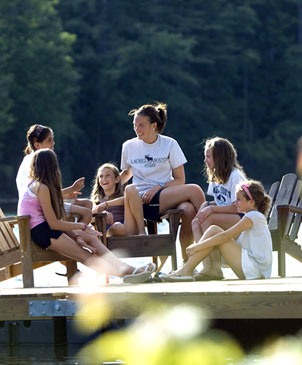 The unseasonably warm and pleasant weather seems to be bringing on summer faster. The flowers are blooming, the birds are back, and the days are sunny. It’s hard not to take advantage of the opportunity to prematurely engage in all of one’s favorite summer activities a little bit. The other day, my sisters and I caved. We decided to rally my niece, go to the park and, yes, even though three of the four us fully qualify as grownups, play on the playground. I’m convinced that no matter how old one gets, no one ever gets tired of swings. It turns out that we weren’t the only ones with such an idea. The place was packed, children and adults everywhere. The park had even opened up the boating dock, something that they usually don’t do until Memorial Day Weekend. People were out on the lake in rowboats and paddle boats. They were picnicking. They rode by on bicycles, skates and skateboards. The comforting familiar smell of campfire from the nearby campground even permeated the air. It was as if 2012 had transposed May and March. My niece and I managed to score the last two remaining swings while my sisters preoccupied themselves on the monkey bars.
My niece and I have this game we play. We see who can swing the highest. The little boy between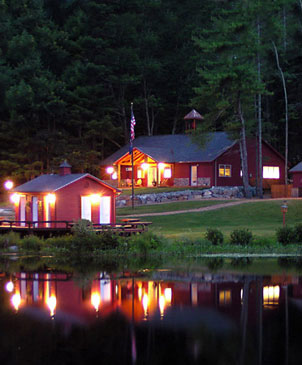 us apparently thought our game looked fun because he joined in. As we slowed down for a bit after tiring ourselves out, he started a conversation. I think he actually wanted to talk to my niece but decided I’d make a good mediator—at least in the beginning. His name was Hunter. What is her name? Angelica. How old is she? She is six. Same as me, he said. What grade in she in? First. Same as me, he said again. He jabbered on. His dad had told him that if he was good they might rent a paddle boat later. Maybe Angelica could come on the paddle boat with him. He wished the concession stand was open so he could get ice cream. Earlier in the day he’d gone to his swimming lesson at the JCC. Then his mom signed him up for camp there this summer. I perked up. Every now and then, chance throws a writer a bone and you have to grab it and run with it. Camp, huh? Do you stay overnight at this camp? No, I’m not old enough. I didn’t tell him that I already knew this. The minimum age for most overnight camps is seven. Is this your first time at the camp? Yes, my sister went last year. She said it’s really fun. What do you think will be the most fun? Ummm…I don’t know. I don’t really know what we do there. I bet you swim there. Yeah, I think we do. I worked at a camp. You did? Yep. Only everyone stayed overnight at my camp. His eyes grew. They did? Yep. I think I would like to do that someday. Was it fun? Yep. What was it like there? I looked around at the bicycles and the boats. I took in the smell of campfire in the air and listened to the sound of all of the children playing and laughing. It’s a lot like this. I think I would like that, he said. Hunter had no idea that he made my day and helped me out a lot by literally handing me material for a camp blog. I hope he has fun at the JCC camp this year…and that he makes it to overnight camp someday. If you haven’t thought about sending your children to camp, take a trip to your local park on a nice spring day. Your senses just may help the decision become clear.
Looking at a Summer Camp but Can’t Come to Us? We’ll Come to You!
 Starting about now and over the next couple of months, it seems that advertisements for summer camp fairs are everywhere you look. Though many families begin researching summer camp in late fall or early winter (or some early as early as the summer before), as soon as the snow starts to melt, they realize how close summer really is and that it’s time to make a decision. Camp fairs are one way to visit with many camp representatives or directors in one area. However, schedule conflicts or distance sometimes make attending camp fairs impossible. That’s why some camps will come to you! Home visits are typically as simple as expressing interest in a camp and requesting a home visit. The camp will work with you to arrange a time for a camp representative, usually a director, to come to your home when he or she is in your area, talk to you about the camp, and address any questions or concerns you may have about the camp specifically or just about camp in general. Afterward, together you can decide with the director or representative whether your child would be a good fit for the camp. Camp directors enjoy home visits because it’s a great way for them to get to know prospective campers and their families in an environment in which they are comfortable.
 Because the individual who comes to your house is typically a director, home visits are not only an ideal alternative to camp fairs but they are also a great way to get know the individual at the helm. For international families or those who live outside of areas in which camps offer home visits, Skype visits are a terrific alternative. A Skype visit is the same basic concept as a home visit, except instead of an in person face to face chat, a visit is conducted via Skype. If you’re interested in a home visit, please contact those camps in which you’re interested to find out when a representative will be in your area. Because it’s the perfect chance to learn about the camp in a relaxed environment, it’s a good idea to do some homework before your home visit and know which questions you’d like to ask. Other than that, however, after you’ve arranged your home or Skype visit, there’s nothing further for you to do except for the doorbell to ring or the call to come through. It really is as convenient as that!
Who Works at Summer Camp?
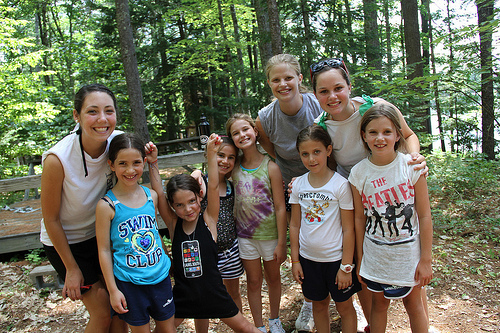 Spring is just around the corner and summer will be here before you know it, which makes now the time to start thinking about how you’re going to spend your summer. If you’re a college student, you could toil away as a server or cook at the local pizza joint or operate rides or peddle souvenirs at the local amusement or sports park. Interning in an office may even be an option you’re considering. And we all know the internships at Wall Street banks are now fewer and far between. But if you want summer employment that promises a summer full of fun and adventure while also helping you develop valuable lifelong skills that employers view favorably, consider working at summer camp. Just because your college days are behind you doesn’t mean that there isn’t a role at summer camp for you too, particularly if you are a teacher or high school or college athletics coach looking for a great way to supplement your income. In fact, the ages and backgrounds of the people who make up the typical summer camp staff are about as diverse as summer camps themselves.
If you don’t think being a counselor is really your thing or you’re pretty sure you’ve aged out of that option, don’t sweat it. There are a 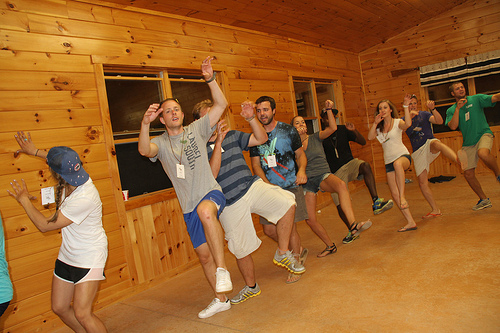 multitude of positions besides counselors that summer camps must fill each summer. For starters, camps have offices and offices require personnel to run them. If answering the phone and administrative tasks are more to your liking, perhaps working in a summer camp office might be the ideal option for you. Additionally, camps need people to help with daily scheduling as well as planning and executing special activities during the evenings and on special days.
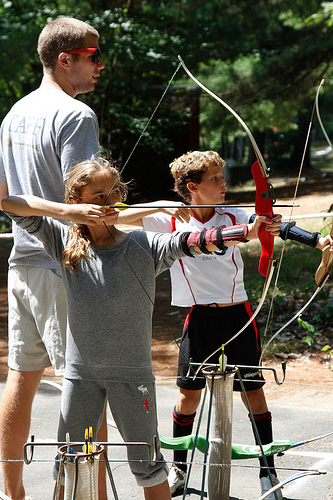
If you like the idea of spending time with children but are an athlete or hobbyist who would rather focus on your passion, summer camps hire specialists to teach skills in specific sports and hobbies to campers. If your passion is photography or videography, as the camp photographer responsible for capturing the fun every day, your role is one of the most integral at camp. In fact, if you can think of an activity, there is probably a staffing need for it at camp, and sometimes some of the hardest positions to fill are ones most people just don’t think of when they think of summer camp, such as creative writing, cooking, robotics, eco science, skateboarding, or magic.
 Although most hospitality positions such as food service, maintenance, and housekeeping are usually filled with international applicants, some camps hire domestic applicants as well, particularly for supervisory roles in these areas. If you are an international student who would love to earn some money by working in the U.S. before or after traveling, one of these summer camp roles may be the perfect option for you…as well as a lot of fun and a chance to make a lot of new friends from around the world!
Camps also have a need to fill key roles that require more foundational knowledge and experience. Aside from campers, camps also need division heads or campus leaders, people who lead a specific age group and supervise all of the counselors within that group. Although many camps fill all or most of their head roles from within, using individuals who have several years of successful camp experience because they require a more intricate knowledge of summer camp, occasionally they will search outside of camp, typically for teachers or other professionals who work with children. Camps also hire program or activity heads, usually college coaches and current or former professionals in their area of expertise, such as soccer, baseball, basketball, gymnastics, etc. However, since almost all activities require people to run them, those with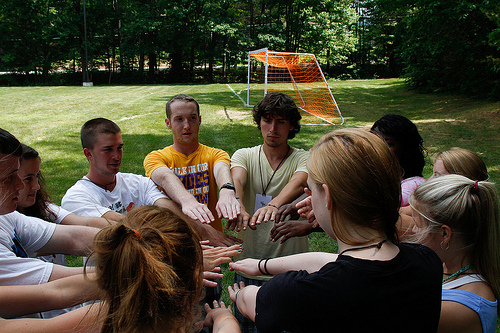 interest and expertise in hobby or arts related programs can often find a summer home at camp in areas such as arts and crafts, dance, theater, etc. Those who manage offices, act as campus administrators, or arrange transportation are typically individuals with some type of related work experience as well. Most camps also employ camp moms or parent liaisons during the summer. These are individuals, often mothers themselves, who monitor the well being of younger campers to insure they are eating properly, staying well groomed, and having a fantastic summer.
So who works at camp? Chances are someone like you! If you’d like a summer job in which you can work among a diverse group of people from all over the world, make lifetime friends, be challenged everyday, and have the time of your life, apply now to one of America’s Finest Summer Camps!
Dance at Camp
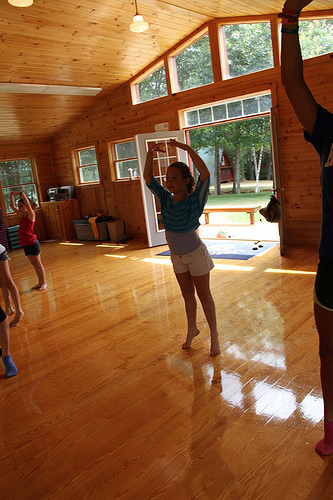 A lot is made of sports at summer camp, but most summer camps also offer many programs in the arts. Dance is one such program that is becoming increasingly popular among both boys and girls. Like the many sports available to try, summer camp dance programs give campers the opportunity to experiment with several different dance styles. Aside from the traditional jazz, instruction is often available in contemporary, modern, hip hop, and ballet. In addition to offering instruction in multiple styles of dance, many camps also form competitive dance teams that, like sports teams, travel to other camps to compete in dance competitions throughout the summer. Even if campers aren’t quite ready to audition for So You Think You Can Dance, being a member of a camp dance team is still well within reach. Typically, because summer camp staff work hard to make their camps a safe environment for children to feel encouraged to step out of their comfort zones and try new things, more emphasis is placed on interest than ability. Many camps create teams for beginners as well as the more experienced. Summer camp dance teams are also the reason many campers find their camp dance programs a great way to pursue a non sports related interest yet still be competitive.
Another reason that summer camp dance programs have become so popular is that they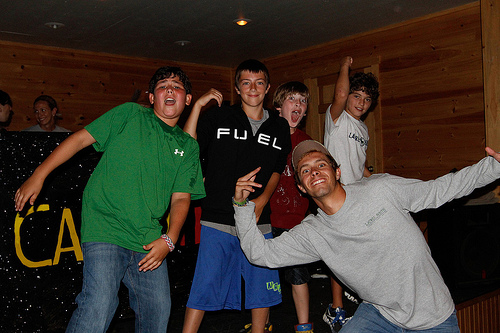 provide an outlet to still be physically active in a creative environment. Summer camp is about letting go and not being afraid to act a little bit silly. Dance provides the same disciplinary and physical training as traditional sports yet also gives campers the opportunity to express themselves and sometimes even be a tad goofy through artistic choreography. Dance instruction is often provided by trained dance instructors or college students who compete on their university dance team or are pursuing a career in the field of dance. The availability of instruction in popular forms of dance such as hip hop has also driven the popularity of dance.
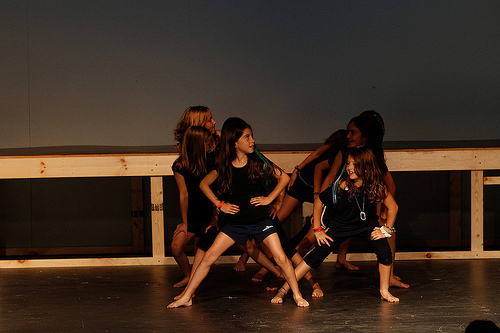 Dance is also versatile. Even though not every camper has a desire to be competitive in dance, campers enjoy learning new moves in dance class and then using them to choreograph bunk or cabin dance numbers for camp shows or talent contests. They also like showing off their moves on the dance floor during camp dances. Having the opportunity to practice new dance moves in an open, accepting environment such as summer camp gives campers the confidence to continue learning, practicing, and trying what they’ve learned at home.
The Joy of Quiet
A recent New York Times story calmly – but strongly — extolled “the joy of quiet.”

Essayist Pico Iyer noted that the average American teenager sends or receives 75 text messages a day. (Parents, don’t shake your heads: The average office worker spends no more than three minutes at his or her desk without interruption.)
Half a world away, Iyer said, “internet rescue camps” in South Korea and China try to save kids “addicted to the screen.”
Iyer said that “the urgency of slowing down – to find the time and space to think” – is both important, and timeless. He quoted a 17th century philosopher’s dictum, that all of man’s problems come from his inability to sit quietly in a room alone.
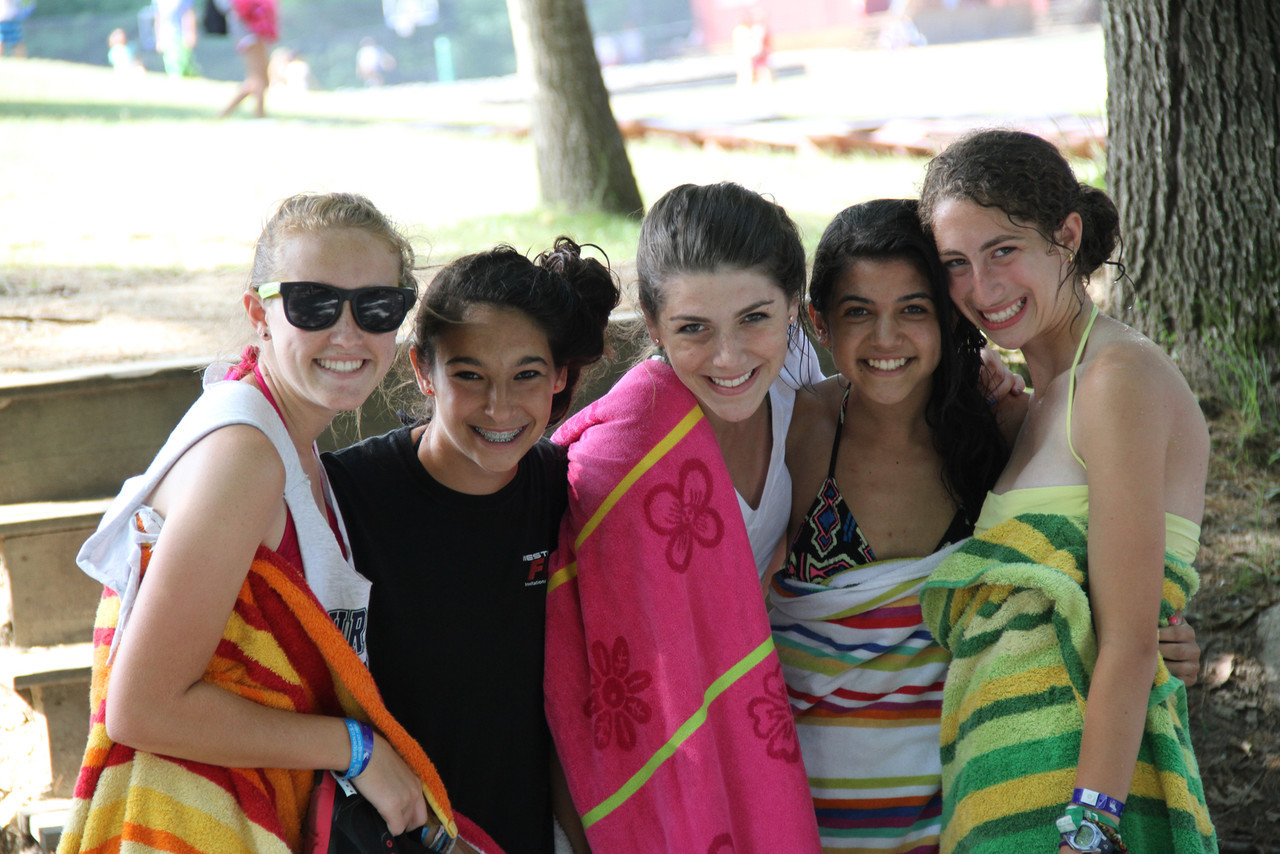
Fortunately, teenagers do not have to travel to Asia to spend quiet time away from electronic devices, with all their beeps and buzzes and hypnotic power to keep us constantly tuned in, always wired, relentlessly “on.”
Camp offers a wonderful opportunity to experience “the joy of quiet.” In the mountains, by lakes, in cabins – for several weeks, the cord is cut. 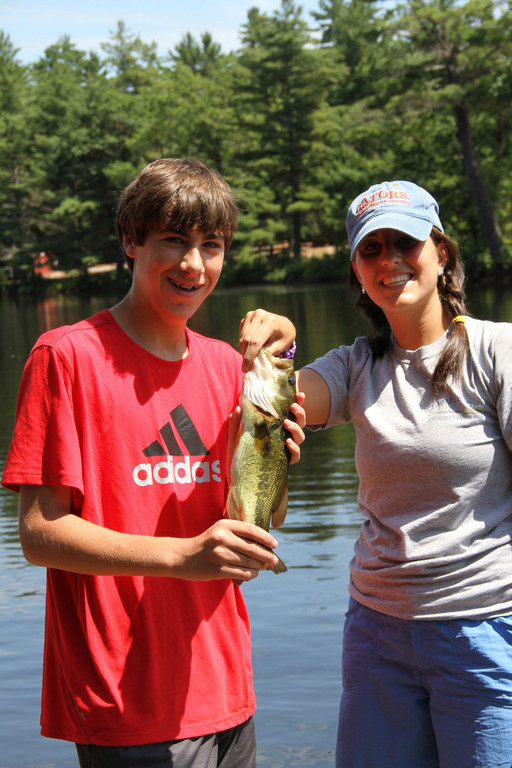
As a result, youngsters – and staff members – enjoy “the joy of quiet.”
It may not be the “quiet” Iyer seeks. The quiet of camp includes raucous laughter. The thwack of a tennis ball. The roar of a waterskiing boat.
But it’s the quiet every human being needs, and so few find. It’s the quiet of spending plenty of time with friends you can actually talk to face to face. The quiet of spending plenty of time at one activity, uninterrupted, from start to finish.
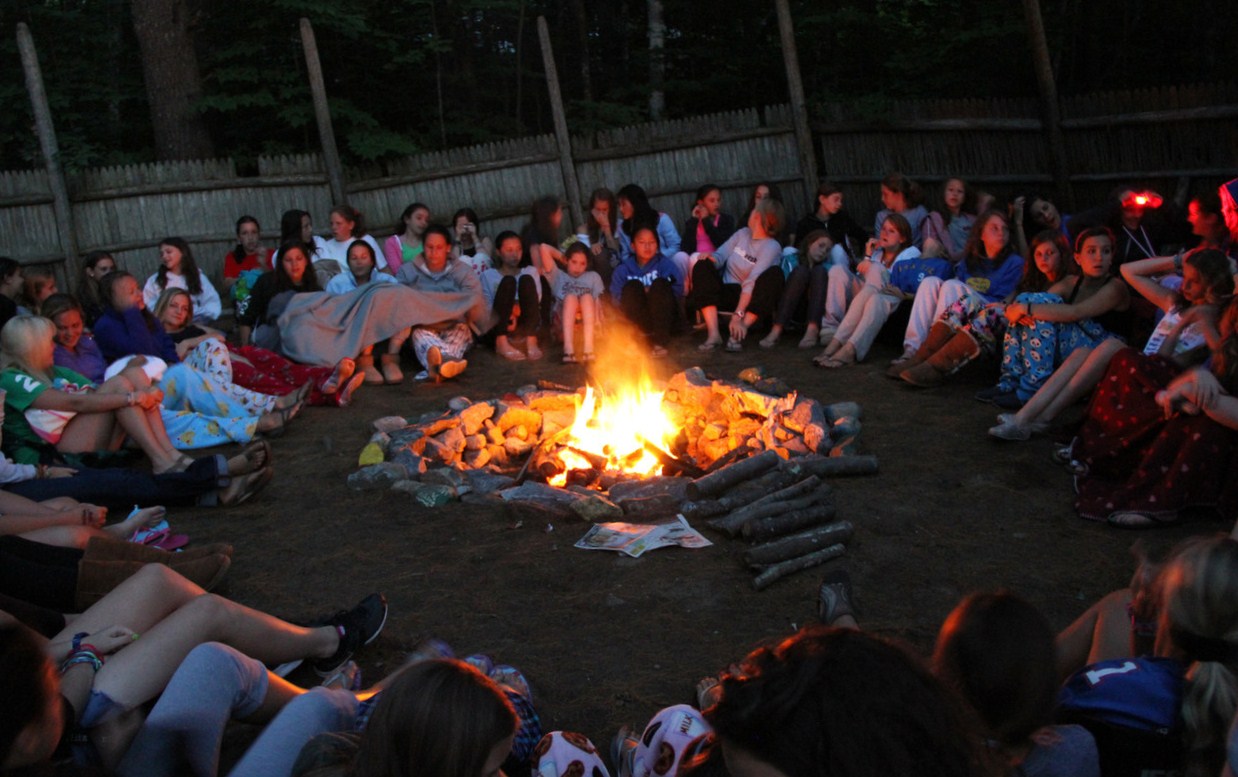 And, sometimes, it’s the quiet of spending time truly alone. Those moments are not silent, of course – crickets chirp and bees buzz –
but they’re moments when “the joy of quiet” that Pico Iyer wrote about is the most profound sound around.
Oh, yeah. They’re the moments when birds tweet.
And human beings don’t have to.